



Product Parameter (Specification)
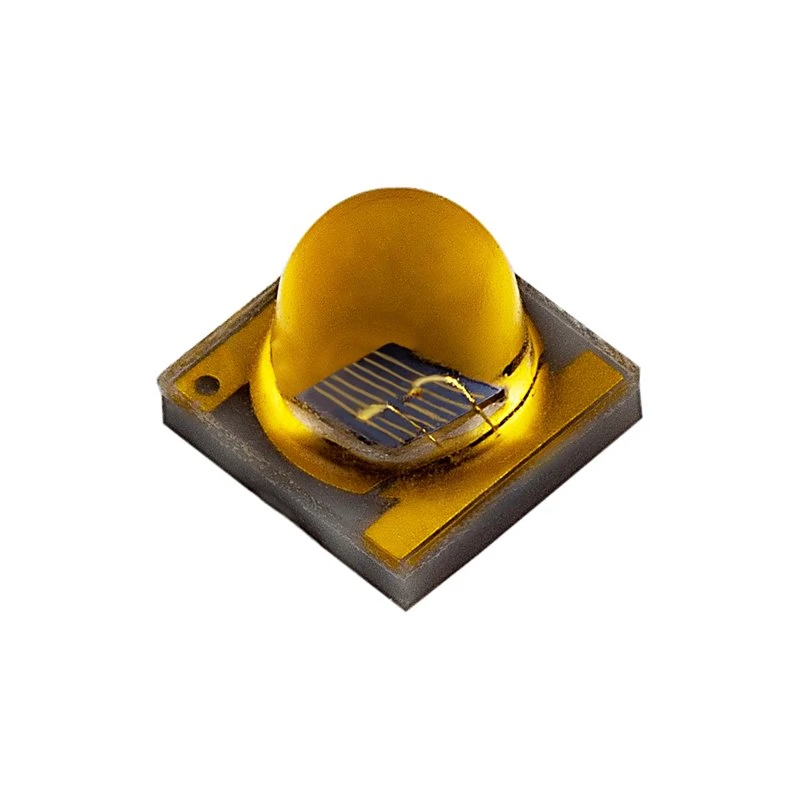
Infrared Color 3535 LEDs
High efficiency and reliability
Low thermal resistance
Designed for high current operation
Pb-free reflow soldering application
>30000Hrs
RoHS Compliant
Widely used for
Plant Grow Lamps
Night Vision System
Bio-Sensing
Security Monitoring
Surveillance CCTV Carema

|
Electrical characteristics |
Symbo |
Rated Value |
Unit |
Condition Temperature |
|
Max continuous working current |
IF |
≤700 |
mA |
Ta=25°C |
|
Max pulse current |
IFP |
1 |
A |
Ta=25°C |
|
Reverse breakdown voltage |
VR |
10 |
V |
Ta=25°C |
|
Operating Temperature |
Topr |
-25℃to +85℃ |
°C |
Ta=25°C |
|
Storage Temperature |
Tstg |
0℃to +40℃ |
°C |
Ta=25°C |
|
Circle solder Temperature |
Tsol |
245℃for 5sec |
°C |
Ta=25°C |
|
complete Temperature |
Tj |
115 |
°C |
Ta=25°C |
|
Optical Characteristics |
||||||
|
Parameter |
Symbol |
Test condition |
Min |
Typ |
Max |
Unit |
|
Luminous power |
Po |
IF=700mA |
80 |
- |
130 |
mW |
|
Luminous intensity |
Ie |
IF=700mA |
- |
30 |
- |
mW/Sr |
|
Emission Angle |
2θ1/2 |
- |
- |
60/120 |
- |
Deg |
|
Wavelength |
λp |
IF=700mA |
- |
1300 |
- |
nm |
|
Half wave width |
Δλ |
IF=700mA |
- |
85 |
nm |
|
|
Forward Voltage |
VF |
IF=700mA |
1.0 |
- |
1.8 |
v |
|
Reverse current |
IR |
VR=5.0V |
- |
- |
10 |
μA |
Product Feature And Application
Optimized for plant growth light, sensor system, night vision device surveillance
cameras
High efficiency and reliability
Low thermal resistance
Designed for high current operation
Infrared applications systems
(1)Infrared can detect the subcutaneous tissue of the human body, so the use of infrared reaction, make the deep skin deep skin temperature rise, expand capillaries, promote blood circulation, the resurrection of enzymes, strengthen blood and tissue metabolism, is a great help to cell regeneration, and can improve anemia. The arteries that regulate blood pressure, hypertension and sclerosis are generally the nervous system, endocrine system, kidney and other small arteries. Far infrared ray can dilate capillaries, improve blood circulation, reduce hypertension, and improve the symptoms of hypotension
(2) Infrared penetration can penetrate deep into the muscles and joints, make the body warm, relax the muscles, promote the exchange of oxygen and nutrients in the microvascular network, and eliminate the fatigue substances, lactic acid and other aging accumulated in the body. It has a very good effect on swelling reduction and pain relief.
(3) The comprehensiveness and penetration of far-infrared radiation is a physical therapy method, which can fully take care of the countless microcirculatory tissue systems inside and outside the human body. After the microcirculation is smooth, the systolic pressure of the heart decreases, the oxygen and nutrition supply is sufficient, and the body is naturally light and healthy. Enhance liver function: The liver is the largest chemical factory in the body and also a blood purifier. The deep thermal effect produced by far-infrared radiation in the body can activate cells, improve the tissue regeneration ability, promote cell growth, enhance liver function, improve liver detoxification and detoxification, and maintain a good visceral environment. This is arguably the best strategy for disease prevention. According to this characteristic, LED infrared lamp beads are applied in the "infrared detoxification treatment instrumen.


Prodection Details
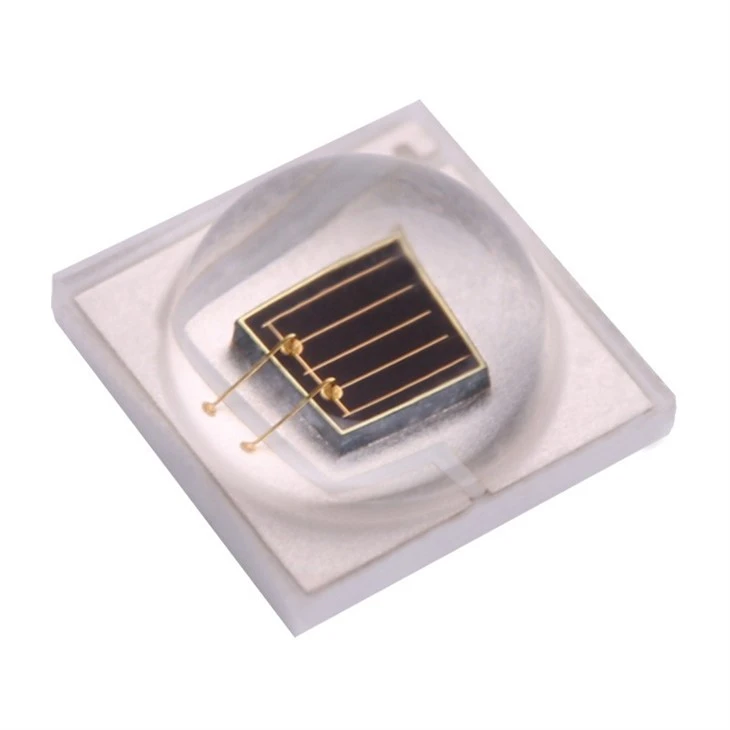
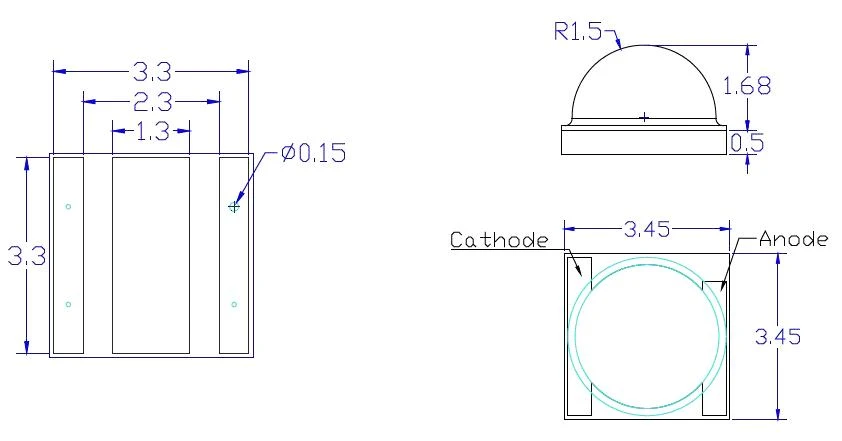
3535 SMD LED 1300NM
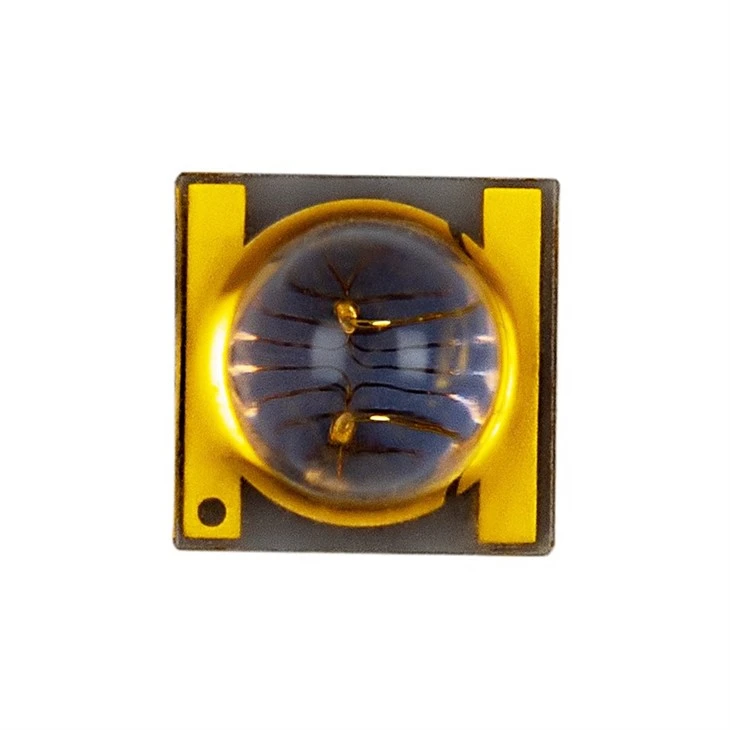
Exterior dimensional drawing
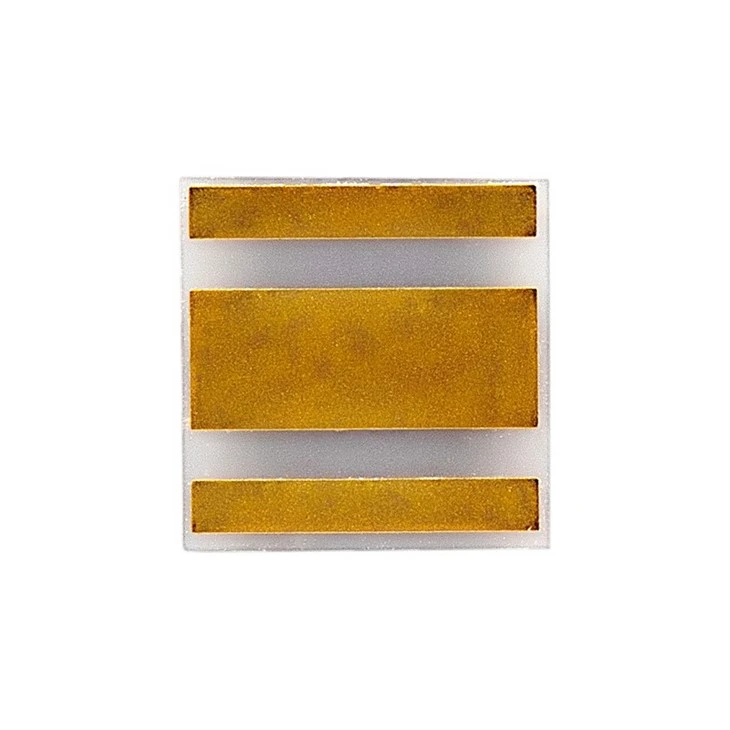
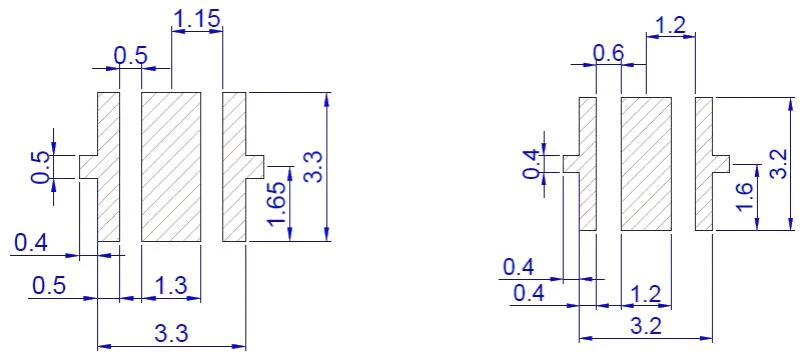
Lamp bead pad diagram
Prodect Qualification


Deliver, Shipping And Serving

Latest News


FAQ
1.What are the application scenarios of 3535 SMD LED 1300NM near-infrared LED?
There are many application scenarios for 1300nm near-infrared LEDs, among which the most common are in food safety testing and analysis, agricultural sorting, and the medical industry. Near infrared LEDs can also be used to detect indicators such as blood oxygen, blood lipids, and blood sugar, as well as to qualitatively and quantitatively evaluate hemoglobin [1]. In the laser processing industry, near-infrared LEDs can also be used to cut metals.
2.The application of near-infrared photothermal conversion in biomedical fields?
Due to its advantages of non-invasive, high spatiotemporal resolution, and easy regulation, near-infrared light is widely used in the field of biomedical research, including tumor treatment, photoregulation of neurons, gene expression and visual system photoregulation, as well as photochemical tissue adhesion Near infrared organic functional dyes, as key materials for fluorescence imaging, have been widely used in the biological field. The near-infrared fluorescence signal has low background interference and strong tissue penetration depth, which can effectively improve the imaging effect in living organisms and tissues.
3.How to achieve two-photon live imaging of the near-infrared area II excitation at 1300 nm?
Fluorescence imaging has the advantages of high sensitivity, real-time control, and simple equipment. Currently, the problem hindering the large-scale clinical application of fluorescence imaging is the relatively shallow penetration depth. Realizing the breakthrough of fluorescence imaging depth is of great significance for the clinical transformation of this technology. Compared with the visible region (400-700 nm) and the traditional near-infrared I region (700-950 nm), the near-infrared II region (1000-1700 nm) has weaker tissue absorption, scattering, emission and spontaneous fluorescence, thus facilitating improving tissue penetration. Recently, the imaging mode of the excitation and emission in NIR II I have received much attention. Another opposing imaging strategy, namely NIR II excitation, NIR I emission, has not been reported. Using the extremely strong penetration ability of long-wavelength near-infrared light (e. g., 1300 nm), one can effectively reduce the interaction between biological tissue and light, and achieve high-resolution imaging in deep layers.
4.What are the characteristics of 300 nm band NIinfrared chip?
Various optical sensors of infrared LED have the advantages of small size, power saving and long service life. In addition, near-infrared light with a wavelength range of 800nm to 2000nm can be highly permeable to organisms for optical sensor applications, including the analysis of crops and food products, as well as health and medical applications. In the medical space, this market for near-infrared LED will continue to expand. For example, a near-infrared LED can be used to measure blood glucose without the need to collect blood samples. Its newly developed NIR LED chip with a center wavelength of 1300 nm band increases greatly the light output to the top surface, which is necessary for sensor applications; while the NIR LED also achieves high power output. In the future, it will produce a near-infrared LED with central wavelengths of 1450 nm and 1650 nm respectively, so as to further improve its near-infrared emitter product lineup.
5.Explore the application scenario of 1300nm near-infrared LED 1550nm NIR?
Scene 1: Beauty instrument, near infrared light wavelength 900-1800nm, peak 1300nm, can directly reach the shallow dermis to the middle layer, with strong penetration. Because NIR penetrates deeper than the visible pulse light, it can pass through the epidermis and directly heat the water molecules in the dermis. The water molecules in the dermis absorb the energy of milk light to generate heat. Heat action promotes collagen hyperplasia in the deep dermis, and the new collagen can rearrange and increase the amount, so as to fill the vacancy of shrinking and lost collagen. Thus lifting the bracket of the skin again, when the collagen is continuously produced, the thickness and density of the dermis increase, to achieve the effect of smoothing wrinkles, fine pores and restoring the elasticity of the skin. Heat action can also accelerate the blood circulation and promote the decomposition of melanin. It is nicknamed "milk light" because it makes the skin as white and smooth as milk and as plump as baby skin after treatment
Scenario 2: Semiconductor detection, the pure silicon ingot is transparent at room temperature, while the doped silicon ingot is opaque at room temperature, and as the temperature increases, the opacity also increases. However, it has an interesting feature that it can be easily penetrated by light of more than 1200nm, and thesensitivity range of short wave infrared lens is just 900-1700nm, which makes short wave infrared the best choice for detect the quality of semiconductor materials and the defects or crack detection of silicon ingots and wafers.
Scenario 3: Medical field, non-invasive blood glucose meter
Scene 4: fruit internal injury detection
Scene 5: Industrial camera filling up the light Scene # 6: Infrared physiotherapy products.
Hot Tags: ir 3535 1300 nm red led, China ir 3535 1300 nm red led suppliers, 950NM 3535 SMD IR LED 2W, TRIAC Optocoupler, SMD 0805 Resistors, 3535 950 SMD LED, 2835 IR LED 740 nm, DIP 4 Zero Cross Optocoupler


