


2835 SMD LED 620NM
2835 620NM lamp bead belongs to the red light LED, the lamp bead adopts the platform chip composed of bracket, glue, gold wire, silver glue package.

Far Infrared LED
What is Far Infrared LED
Far infrared (FIR) refers to a specific range within the infrared spectrum of electromagnetic radiation. It encompasses radiation with wavelengths ranging from 15 μm (micrometers) to 1 mm, which corresponds to a frequency range of approximately 20 THz to 300 GHz. This places far infrared radiation within the CIE IR-B and IR-C bands.The longer wavelengths of the FIR spectrum overlap with a range known as terahertz radiation.Different sources may use different boundaries to define the far infrared range.
Benefits of Far Infrared LED
Far infrared can reduce inflammation
In a double-blind study, 50 patients with degenerative osteoarthritis were separated into three different treatment groups — one was treated with a placebo, one with far infrared light, and one with red light therapy. The subjects used the treatment on their knees for 15 minutes a day for ten days. At the end of the ten days, there was a significant difference between the three groups. The study found that those in the red and far infrared groups suffered a 50 percent reduction in pain following the treatment.
It can improve circulation
Studies have shown that when far infrared used over an extended period, it can improve your blood vessel function. Not only can it increase blood flow for up to 60 minutes, but the skin temperature remains the same. Another study found it increased oxygen levels in the body, reducing fatigue. To learn the mechanics of how circulation gets a boost, check out this blog.
Fir can help improve exercise and recovery
Anyone who works out knows what post-exercise soreness is. Also known as DOMS (delayed-onset muscle soreness), it is your body telling you it’s repairing the muscle fibers that tore while you were exercising. These microscopic tears create inflammation and pain. And as we already learned, FIR can help with inflammation, shortening your recovery period so you can get back to exercising!
It can speed the wound healing process
Far infrared rays have been shown to increase the levels of certain critical factors in the healing process, which can speed up the progression as well as the activity of cells that repair the damage.
Infrared can help improve your mood
Studies have shown that using far infrared LED treatment at acupuncture points, increased the serotonin levels of patients, improving the participants’ mood. In another study, rats that were exposed to long-term infrared light treatment reduced some negative behaviors such as anxiety and depression.
-
![2835 620NM SMD LED]()
-
![2835 660NM SMD LED]() 2835 660NM SMD LED2835 SMD LED 660NMread more
2835 660NM SMD LED2835 SMD LED 660NMread more
2835 660NM lamp bead belongs to the red light LED, the lamp bead adopts the platform chip composed of bracket, glue, gold wire, silver glue package. -
![2835 IR LED 740 nm]() 2835 IR LED 740 nm2835 740NM SMD IR LEDread more
2835 IR LED 740 nm2835 740NM SMD IR LEDread more
2835 740NMSMD IR LED lamp bead belongs to the near infrared LED, the lamp bead adopts the platform chip composed of bracket, glue, gold wire, silver glue package. -
![2835 SMD LED 810 nm]() 2835 SMD LED 810 nm2835 SMD LED 810NMread more
2835 SMD LED 810 nm2835 SMD LED 810NMread more
2835 810NM lamp bead belongs to the near infrared LED, the lamp bead adopts the platform chip composed of bracket, glue, gold wire, silver glue package.


Why Choose us
Quality services
Our team is committed to delivering high-quality services to our clients. We use the latest technologies and tools to ensure that our services exceed your expectations.
01
Quality
We offer high quality services and products that are relatable and resonate with your business needs.
02
Experience and expertise
Our company has been in business for many years and has amassed significant expertise and experience to provide quality services to our clients.
03
Competitive pricing
We offer competitive pricing for our services without compromising on quality.
04
Certifications and quality standards
Choose a factory that adheres to industry standards and certifications to ensure product safety and quality.
05
Is Far Infrared LED Therapy Over-Usage Something to Worry About?
Frequency of Use
The frequency of far infrared LED therapy sessions will depend on the issue you are trying to treat. For example, if you are using RLT to treat acne, it is recommended that you get 2-3 sessions per week until the acne starts clearing up. At this point, you can reduce your frequency to once every two weeks or so.
However, if you are using RLT for wrinkles or age spots, then 1 session a week should be enough for maintenance purposes. It is important to note that more frequent usage doesn't necessarily mean better results; overdoing it could lead to irritation and sensitivity in the treated areas, so it's best not to exceed the recommended frequencies.
Dosage
When it comes to dosage, the amount of time each session lasts depends on the area being treated and your device's specifications. Most devices recommend that treatment times last between 5-15 minutes; however, some devices may have different instructions depending on your specific needs. Generally speaking, it is recommended that you start with a lower dosage before gradually increasing it over time as needed.
Be aware that certain conditions may require higher doses than others; speak with your doctor, dermatologist or a qualified beem light sauna expert before starting any new treatment protocol in order to ensure safety and effectiveness.
How Much is Too Much?
It's important to note that there is no consensus on how much red light therapy is necessary for optimal health benefits . Factors such as age, condition being treated, severity of the condition, etc., all come into play when determining how much red light therapy a person should do in order to maximize its benefits without overdoing it. Generally speaking, most people report best results from using it three times a week for 10-15 minutes per session; however some people may need more or less depending on their individual needs. Additionally, many experts recommend starting off with shorter sessions (5 minutes) and gradually working up to more if needed.
While far infrared LED therapy may offer numerous health benefits—from reducing wrinkles and easing joint pain to improving sleep quality—it's important not to overdo it. Depending on your individual needs you may require longer or shorter treatments than others.
It's important to remember that everyone responds differently to red light therapy treatments; what works for one person might not work for another. Be sure to consult with a medical professional before beginning any new regimen in order to make sure it's right for you. Additionally, keep an eye out for any adverse reactions or side effects when starting out; if something doesn't feel right during a session or afterwards, stop immediately and consult with a doctor or one of our qualified beem light sauna experts before continuing use. If done correctly under professional supervision and with proper care and caution taken beforehand, red light therapy can be an effective tool for improving overall health!
Everything You Need To Know About Red And Far Infrared LED Therapy
What is red light therapy, and what are the benefits?
Light therapy tools are often categorized by color. This is because each type of light has a specific wavelength that produces different effects on the body. In light therapy, these wavelengths matter. Red lights have the perfect wavelength for treating fine lines, wrinkles, and the skin's texture, color, and overall complexion. Red light therapy won't penetrate as deeply as other LEDs, such as infrared light, making it ideal for skincare regimens.
Experts believe red light therapy works by strengthening mitochondria, which are responsible for producing energy in our body's cells. Mitochondria are mainly stored in the molecule adenosine triphosphate (ATP), which helps the body use its energy. When you apply these rays to your skin, red light therapy energizes your cells to repair and rejuvenate your skin while boosting cell production.
Additionally, red lights help promote blood circulation, bringing oxygen and nutrients to your skin's surface and creating a radiant, healthy glow.
Even though red light therapy is most well-known for its anti-aging benefits, you will also find red lights used in pain relief products. That's because increased circulation from red light therapy brings more oxygen to cells and removes toxins for accelerated healing and recovery.
What is infrared light therapy, and what are the benefits?
Light in the infrared range of the spectrum penetrates much deeper than red light to better reach nerves and muscle tissue. Far infrared LED light therapy allows the cells to absorb energy and increase blood flow in the localized area.
Increased blood flow can reduce inflammation associated with various conditions, such as rheumatoid arthritis. Experts have also noted how well infrared light treatments promote neural stimulation, wound healing, and even cancer treatment.
It can also support natural cellular regeneration to speed up the body's natural healing processes. Studies have shown infrared's effectiveness in promoting wound and injury healing. As a result, infrared light therapy products are excellent for pain relief. They are ideal for athletes hoping to recover their muscles and people struggling with tight or sore muscles and achy bones.
Due to their regenerative properties, many people use infrared light for skincare and anti-aging regimens. The correct dose of infrared treatment can help reverse signs of aging and minimize scarring from acne.
Can red and infrared light therapy be combined?
Red and infrared light therapy can be combined to deliver maximum results for people with signs of aging or for pain relief, like arthritis pain.By combining these LEDs, anti-aging therapy devices can more effectively reduce signs of aging and improve the skin's overall complexion.Additionally, most pain relief devices are created using a combination of red and infrared light. These tools provide powerful soothing and regeneration of sore muscles.

The Difference Between Far Infrared LED And Visible Light
Wavelengths
Visible light has a wavelength that ranges from 380 nm – 750 nm on the electromagnetic spectrum while far infrared LED is just beyond it, ranging from 700 nm – 1 mm, the start of the non-visible portion of the spectrum. As a result, infrared cannot be seen except with special equipment like a security camera.
How to generate visible light
In the past and during the times of incandescent bulbs, visible lights were generated with films and colored lenses that corresponded to the color of light being generated. These days, visible lights are created using LEDs and they are more durable, more power efficient, and have a wider range of functions than incandescent bulbs.
How to create infrared light
Infrared light is also generated using LEDs but, in this case, the lighting units are designed to work within the non-visible spectrum. Often referred to as IR LEDs, these light sources emit a dark purple or blue light that cannot be seen with the naked eye.
Their applications
Visible light is the common lighting method and we see it all around us. It is used in homes, work areas, factory floors, parking lots, loading docks, etc. They are also used as warning systems and to provide lighting for CCTV cameras in public places. The presence of floodlights warns intruders that their actions are being monitored.
Infrared light, however, is used when the intention is to monitor intruders covertly. Without a bright light to warn them about the presence of security cameras, intruders no longer feel the need to avoid surveillance, leaving them exposed to the IR-illuminated cameras.
Application of Far Infrared LED
01/
Medical uses
Infrared radiation finds application as a heating source. There are infrared saunas used to treat high blood pressure and rheumatoid arthritis. Infrared radiation is considered to be one of the safest methods of physiotherapy.
02/
Manufacturing industries
Industries which concentrate on manufacturing processes such as forming of plastics, curing of coatings, plastic welding, etc., use infrared heaters in place of contact heating and convection ovens.
03/
Cosmetology application
Far infrared LED rays are widely used for cosmetic applications such as treating skin injuries, smoothing wrinkles, reducing the occurrence of dandruff, blackheads, etc. Infrared rays are used because they can penetrate the skin up to 3-4 mm. They also warm the skin resulting in improved blood circulation and a continuous supply of oxygen and other nutrients to the skin.
04/
Astronomy
Astronomers use optical devices such as mirrors, solid-state digital detectors, and lenses to study objects from space with the help of infrared waves. The images from these optical devices are obtained with the help of an infrared telescope.
05/
Massage therapy
Far infrared LED are used for warming the skin and for relaxing the muscles. Infrared rays are preferred because of their penetration quality through the skin.
06/
Infrared photography
Infrared filters are used for capturing pictures in infrared photography. This imaging is done for objects that are placed in the near-infrared spectrum. Most digital cameras use infrared blockers making the near-infrared appear as a purple-white colour in the final image.
Properties of Far Infrared LED
Transverse waves
According to Serway’s College Physics, an infrared wave is said to be a transverse wave, i.e., the displacement of the wave is at the right angle to the direction of the wave propagation.
Wavelength
The wavelengths of infrared waves are unique and are usually measured in microns. A micron is defined as one millionth of a metre. The shortest wavelength of an infrared wave is about 0.7 microns. The longest wavelength of an infrared wave is 350 microns. According to studies, the upper limit of any infrared wave is 1000 microns.
Speed
The speed at which infrared waves travel is 299,792,458 m.s-1.
Particle or wave?
According to quantum theory, infrared waves can exist as either a wave or a particle at the same time.
Absorption and reflection
The absorption and reflection of infrared waves depend on the nature of the substance that the waves are made to strike. Materials such as ozone, carbon dioxide, and water vapour absorb infrared radiation. Snow and aluminium foil are materials that reflect infrared radiation.
Refraction and Interference
Infrared waves exhibit the property of refraction, making the waves experience a slight change in direction when the wave passes from one medium to another. Refraction properties of infrared waves can be noticed in the earth’s atmosphere. When two infrared waves with the same wavelength meet each other, they will interfere with one another.
Thermal properties
Infrared radiation can be the source of heat as they have thermal properties. When infrared radiation strikes the oxygen or nitrogen molecules, it makes the molecules move faster as they gain more energy. So it can be concluded that infrared radiation makes materials hotter and can be used as a heat source.
Characteristics of Far-infrared LED Area
|
Near-infrared |
The wavelength ranges from 0.75 to 1.4 micrometres. This is used in material science, fibre optic communication, and in the medical field. |
|
Short wavelength infrared |
The wavelength ranges from 1.4 to 3 micrometres. This is used in telecommunications and for military purposes. |
|
Medium infrared |
The wavelength ranges from 3 to 8 micrometres. This is used in the chemical industry and in astronomy. |
|
Long-wavelength infrared |
The wavelength ranges from 8 to 15 micrometres. Astronomical telescopes and optical fibre communications are possible with the help of long-wavelength infrared |
|
Far infrared |
The wavelength ranges from 15 to 1000 micrometres. It is used mainly in the treatment of cancer therapy. |
Our Factory
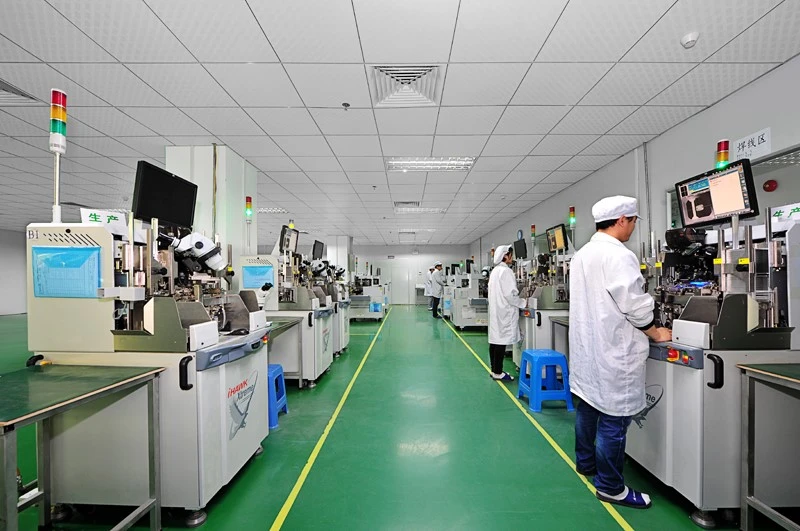
Founded in 2004, Lighting Ltd. specializes in the packaging of medium- and high-power LED devices for lighting; and moved its factory to Fujian Hutou Optoelectronic Industrial Park in 2017.
In Fujian, we have more than 25,000 square meters of factory buildings and more than 20,000 square meters of ultra-clean, anti-static modern dust-free workshop.
Passed IATF16949, ISO9001, ISO14001, ISO45001 (OHSAS18001) quality management system certification.
Semiconductor packaging business since 2015; own optocoupler brand in 2018; optical sensor product line in 2020; integrated class packaging product line in 2021.
Dozens of invention and utility model patents, many authorized patents.
Responding to the strategic goal of China Chip: cooperating with domestic mainstream brands to actively create integrated products made in China.
Our Certificate

Asked Questions
As one of the leading far infrared led suppliers in China, we warmly welcome you to buy discount far infrared led from our factory. All customized products are with high quality and competitive price. For quotation and free sample, contact us now.
Far Infrared LED, Infrared LED, 2835 620NM SMD LED