

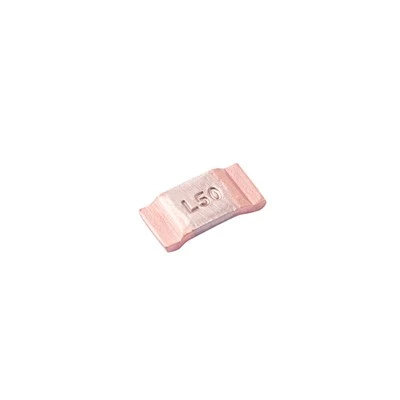
SMD 2512 Matel Element
Alloy resistor 2512 is a surface treated alloy resistor with excellent mechanical, electrical, thermal, and chemical stability. At high temperatures, it has excellent...

Matel Element - Shunt Resistors
What is Matel Element - Shunt Resistors
Element resistors, or Shunts, are produced using a solid piece of resistance material. Depending on the material chosen, these resistors can yield great stability in very low values. This stability can be difficult to achieve in other constructions at such low values.
Benefits of Matel Element - Shunt Resistors
Size VS capability
A key advantage of these matel element - shunt resistors is small size vs power rating and isolation voltage. Thick film resistors are designed to make easy use of thermal sinks. This makes them a quarter of the size of a wirewound equivalent – making them more suitable for systems with limited space.
Low Inductance
Inductance is typically an unwanted property in matel element - shunt resistors, particularly in filter circuits. All conductors have inductance, the value depends on its geometry. Generally a wide, flat and short geometry will have lower inductance than a thin, wound long conductor. This is where printed conductive ink allows resistor elements to be formed on wide flat ceramic insulating substrate. This delivers a very low inductance resistor.
Thick film resistors, with lower stray inductance, are therefore the preferred resistor type for high frequency applications like PWM filters or current shunts.
Heat dissipation
Dissipating heat from a matel element - shunt resistors is all about surface area and the interface to a cooler medium. Thick film resistors enable a large flat surface area, meaning they are easy to attach to a heat sink or cold plate. Power dissipation of 2 kW is possible in 60mm square.
High Isolation voltage
A power resistor printed onto a ceramic substrate has an intrinsic isolation from the terminals to the base plate. This can be is enhanced with coatings (polyimide for example) applied to the resistor element. The ceramic substrate is then placed in a supporting mechanical housing which is filled with a silicone gel to complete the electrical isolation solution. Isolation rating of up to 12 kVrms to the baseplate can be achieved in a range of ultra high power resistors.
Robust construction
Thick film matel element - shunt resistors are more mechanically robust than wirewound resistors, which makes them less susceptible to damage as a result of poor handling or packaging, or rough insertion into a system.
Further, their construction involves constructive paint being screen printed and fired onto an insulating substrate, usually a ceramic base, making it a permanent assembly. This construction makes the resistors better at dealing with high power surges than their wirewound counterparts.
The ceramic layer – with the resistor printed onto it – is housed in a custom designed plastic case for protection, which also can incorporate mounting hardware. The housing also can have a spring installed to manage the pressure needed to reliably achieve good thermal contact without cracking the ceramics.
-
![SMD 2512 Matel Element]()
-
![SMD 3920 Matel Element]() SMD 3920 Matel ElementSMD 3920 Matel Elementread more
SMD 3920 Matel ElementSMD 3920 Matel Elementread more
Alloy resistor 3920 is a surface treated alloy resistor with excellent mechanical, electrical, thermal, and chemical stability. At high temperatures, it has excellent... -
![SMD 5930 Matel Element]() SMD 5930 Matel ElementSMD 5930 Matel Elementread more
SMD 5930 Matel ElementSMD 5930 Matel Elementread more
The 5930 Manganin resistor is a special manganin resistor, its package size is 5930, with high precision, low temperature coefficient, high stability and good...

Why Choose us
Quality services
Our team is committed to delivering high-quality services to our clients. We use the latest technologies and tools to ensure that our services exceed your expectations.
01
Quality
We offer high quality services and products that are relatable and resonate with your business needs.
02
Experience and expertise
Our company has been in business for many years and has amassed significant expertise and experience to provide quality services to our clients.
03
Competitive pricing
We offer competitive pricing for our services without compromising on quality.
04
Certifications and quality standards
Choose a factory that adheres to industry standards and certifications to ensure product safety and quality.
05
Your Essential Guide on How to Use DC Current Matel element - shunt resistors
How to Install DC current shunt resistors
Installing a DC current shunt resistors is a relatively simple process, but following the instructions carefully is essential to ensure accurate readings. First, you’ll need to purchase a shunt rated for the current you expect to measure. Second, you’ll need to wire the shunt in series with the load being measured. And third, you’ll need to connect the shunt-sensing leads so you can take accurate readings.
How to use DC current shunts
To use a DC current shunt resistors, connect the voltmeter to the shunt sensing leads, and then measure the voltage drop across the shunt. The current flowing through the circuit can then be calculated using the following formula:
Current (in amps) = Voltage drop (in millivolts) / Shunt resistance (in milliohms)For example, if the voltage drop across the shunt is 50 millivolts and the shunt resistance is 10 milliohms, the current flowing through the circuit is five amps.DC current shunts are an essential tool for measuring DC current. By understanding how to use them correctly, you can ensure that you get accurate measurements.
Shunt Resistors Information
Show all shunt resistors manufacturers
Matel element - shunt resistors are connected in parallel with an instrument or component to divert electrical current. They provide an alternate path for current in case of failure, and can be used to accomplish a reduction in input sensitivity from the input line to ground. Current shunt resistors are low resistance, passive electronic devices used to measure alternating current (AC) or direct current (DC) by the voltage drop those currents create across the resistance. Electrical specifications for shunt resistors include ohms, resistance tolerance, current rating, power rating, temperature coefficient of resistance, and power coefficient of resistance. Ohms (O) measure a material's opposition to the flow of electricity in a circuit. Temperature coefficient of resistance (TCR) refers to the change in resistance with change in temperature. Power coefficient of resistance (PCR) is the temperature rise caused by self-heating. For current-sensing shunts, resistances typically range from 100 µO to 500 mO. Low TCR and PCR are important. For shunt resistors used in current conversion applications, high precision may be required.
Physical Specifications
Physical specifications for matel element - shunt resistors include mounting style, lead type, and resistor material. Shunt resistors can be bolted, chassis mounted, surface mounted, or through-hole mounted. Chassis-mounted resistors attach to a metal surface for maximum heat dissipation. Surface mount technology (SMT) and through-hole technology (THT) are other common mounting styles. Lead types include: axial leads, gull-wing leads, J-leads, radial leads, screw terminals and tab terminals. Shunt resistors without leads are also available. Choices for shunt resistor material include: carbon film, ceramic, metal alloy, metal film, metal oxide, thick film, thin film, and wire wound. Carbon shunt resistors are made of a mixture of finely-ground carbon and insulating material held together by a resin binder. Ceramic shunt resistors are made of solid, high-temperature, ceramic, resistive materials with bonded metal contacts. Metal alloy shunt resistors contain two or more metallic elements. Wire wound shunt resistors are made by winding thin wire onto a ceramic rod.
Packing Methods
Matel element - shunt resistors differ in term of packing method. Some passive electronic components are packed in tape reel assemblies that include a carrier tape with embossed cavities for storing individual components. Others are packed in trays (rails) are made of carbon-powder or fiber materials and molded into rectangular outlines that contain matrices of uniformly spaced pockets. These containers protect components during shipping and provide proper component location and orientation for use with industry-standard, pick-and-place board assembly equipment. Shunt resistors that are packed in shipping tubes, stick magazines, or bulk packs are also available.

How to Calculate Current Using a Matel Element - Shunt Resistors
Step One: Write Down Ohm's Law
You should begin by writing the Ohm equation of V = I * R, with V being specific to the voltage drop across the shunt resistor, I being the flowing current, and R being the shunt resistance.
Step Two: Substitute the Voltage and Current
Swap the values of voltage (V) and current (I) in the equation. For instance, if voltage across the shunt equals 10 then the level of current flowing will be 1 ampere, with the equation being 10 = 100 * R.
Step Three: Complete the Workings of Ohm
Divide the sum of the Ohm's law equation by 100 to calculate the R value. The value of R in this instance will be 0.1 ohm, corresponding with the shunt resistor value.
Types of Matel Element - Shunt Resistors
Manganin shunt resistors
These resistors have a wide range of rated Amperages, meaning that they can be built to read anywhere from 1 Amp to over 8000 Amps. These shunt resistors can also be pulsed with higher amperages as long as the temperature of the manganin stays below 140C. The output voltage is usually between 50mV and 100mV and has to be passed through an amplifier.
Kelvin shunt resistors
These resistors are designed to provide a high degree of accuracy when measuring current. Kelvin shunt resistors are typically used in applications where it is important to know the exact amount of current flowing through the circuit but the length of the leads could cause the value to be inaccurate.
Smart shunt resistors
These resistors are based on manganin shunts but have a built-in amplifier to boost the typical 50mV output to over 2.5 Volts, or to convert the analog output to a digital signal such as CANBUS or RS485.

Do You Need a Shunt Resistors? What You Need to Know
What are shunt resistors
A shunt resistor is a type of resistor that is used to measure the current flowing through a circuit. The shunt resistor is placed in series with the circuit, and the voltage across the resistor is measured to determine the current flowing through the circuit.
Why do you need shunt resistors
There are many reasons why you would need to measure the current flowing through a circuit. For example, you may need to know how much current is flowing through a particular component to determine if it is operating within its specified range. Additionally, measuring current can be used to troubleshoot problems in a circuit. For example, if you know that a certain amount of current should be flowing through a particular component, but you measure a lower current, this could indicate that there is a problem with the component.
How to size a shunt resistor
When selecting a shunt resistor, you must first determine the maximum current that will be flowing through the circuit. The maximum current is typically specified in the datasheet for the component that you are measuring. Once you know the maximum current, you can select a shunt resistor with a resistance that is low enough to allow the maximum current to flow, but high enough to allow for accurate voltage measurement. If the current draw will be steady it is recommended per IEEE standards to not have the current draw go above 2/3 of the rated current, and lower if the ambient is over 40C.
Considerations When Choosing Matel Element - Shunt Resistors
Current rating
The matel element - shunt resistors must be able to handle the maximum current it is expected to measure.
Resistance value
The resistance value affects the voltage drop, which in turn influences the measurement accuracy. A lower resistance results in a smaller voltage drop and less power dissipation, but may compromise accuracy.
Power rating
The power rating determines the maximum amount of power the shunt resistor can safely dissipate as heat.
Temperature Coefficient
The temperature coefficient of resistance (TCR) indicates how much the resistance value will change with temperature, which can affect measurement accuracy.
Applications of Matel Element - Shunt Resistors
Power management: Shunt resistors play a vital role in power management systems, including power supplies and battery management, where they aid in monitoring and regulating the current flow.
Automotive: In the automotive industry, shunts are used in electric vehicles (EVs) and hybrid electric vehicles (HEVs) for battery management and power control systems.
Industrial automation: Industrial machinery and automation systems often use shunt resistors to ensure safety and efficiency in operations.
Telecommunication: Shunt resistors are used in telecommunications equipment for current sensing and power management.
Our Factory
The 1st team release high temperature Pt thin film sensor in Taiwan in1999
• The 1st team release current sensing resistor in Taiwan by lithography
process in 2000
• The 1st team release thin film high freq. chip inductor in size 0402 and 0603
in Taiwan in 2002
• Complete series of thin film resistor in size 0201 ~ 2512 in Taiwan in 2003
• The 1st team release thin film chip fuse in Taiwan in year 2004
• The 1st team release thin film ESD suppressor worldwide in 2005
• 1st team release thick film printing NTC thermistor in Taiwan in 2006
• The 1st team release thin film current sensing resistor in Taiwan in 2007
• The 1st team release Shunt CSR in Taiwan in 2012
The 1st team release high temperature Pt thin film sensor in Taiwan in1999
• The 1st team release current sensing resistor in Taiwan by lithography
process in 2000
• The 1st team release thin film high freq. chip inductor in size 0402 and 0603
in Taiwan in 2002
• Complete series of thin film resistor in size 0201 ~ 2512 in Taiwan in 2003
• The 1st team release thin film chip fuse in Taiwan in year 2004
• The 1st team release thin film ESD suppressor worldwide in 2005
• 1st team release thick film printing NTC thermistor in Taiwan in 2006
• The 1st team release thin film current sensing resistor in Taiwan in 2007
• The 1st team release Shunt CSR in Taiwan in 2012

Our Products

Asked Questions
As one of the leading matel element - shunt resistors suppliers in China, we warmly welcome you to buy discount matel element - shunt resistors from our factory. All customized products are with high quality and competitive price. For quotation and free sample, contact us now.
Resistors, SMD 5930 Matel Element 7W, SMD 2512 Matel Element