


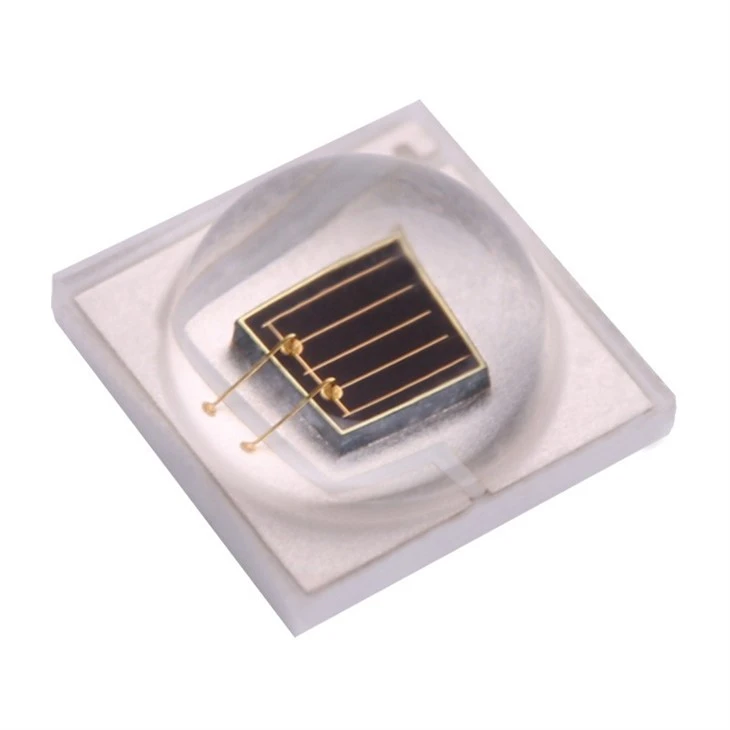
2835 SMD LED 850NM
2835 850NM SMD bead belongs to the near infrared LED, the lamp bead adopts the platform chip composed of bracket, glue, gold wire, silver glue package.

Near Infrared LED
What is Near Infrared LED
Infrared Light (IR) is the light found just past what is visible to the human eye. Near-Infrared Light (NIR) is the section of electromagnetic radiation (EMR) wavelengths nearest to the normal range but just past what we can see.
Visible light is the smallest section of the electromagnetic (EM) radiation field. We are surrounded by electromagnetic energy every day through our radios, televisions, microwave ovens, sunshine, X-rays, and for some, gamma rays. This infrared spectrum is then divided again into near, mid, and far. The technology in a StoneLock GO biometric reader uses a near-infrared camera to authenticate users within an integrated access control system.
Benefits of Near Infrared LED
Skincare benefits
Light in this range stimulates cellular energy that encourages the skin to renew and heal, which helps improve the skin's look, feel, and texture. NIR light enables the skin to recover from injury, discussed more below. It also provides anti-aging benefits for the skin. This light wavelength improves levels of collagen and elastin, which are partly responsible for youthful-looking skin. Near-infrared light therapy works against skin aging issues that might be bothering you, such as wrinkles and sagging, and promotes elasticity, smoothness, and good texture.
Anti-Inflammatory processes
Continuous inflammation is one of the problems caused by too much oxidative stress. While some inflammation has a healing purpose in the body, too much contributes to health problems. NIR therapy provides cellular energy and blood vessel widening that help to counteract inflammatory responses within the body. This therapy cuts down on inflammation, but it also helps your body heal tissue damaged by inflammation.
Injury recovery
Near infrared LEDs injury healing, both through its skin benefits and beyond. It encourages the healing of skin tissue injuries, as the increased collagen production helps wounds heal faster and minimizes scarring. In addition, this light therapy goes farther than skin deep to help your body's natural healing process when you have acute injuries, sore muscles, joint and muscle pain, minor muscle damage, or repetitive injuries.
You can use this light therapy directly on an injured spot or within a full-body treatment. By working with the body's natural healing processes, including inflammation and circulation, light therapy supports healing even better than ice, which slows the initial, beneficial inflammation and, therefore, may delay healing.
Full-Body photobiomodulation benefits
Photobiomodulation therapy is another term for light therapy that expresses how healing light promotes positive life-changing processes. While you can use near-infrared light therapy to target a specific area, such as the face or an injured spot, it's especially beneficial for a full-body photobiomodulation treatment. Using a light therapy bed exposes your entire body to the benefits of this therapy and helps promote cellular function throughout the body, both on a superficial skin level and deep within the body.
Customized treatment
Light therapy provides the ability to adjust to the goals and needs of each patient. There are light therapy treatment options to provide the most benefit. In addition to choosing the light wavelength, such as near-infrared light, a light therapy provider can also choose continuous-wave treatments that offer a reduced power, ongoing session, or pulsed wave treatments that provide quick bursts of higher energy. In addition, a provider can give therapy for a certain length of time during each session and can recommend a treatment frequency and duration to fit your care plan, whether your goal is to improve wellness, create better-looking skin, or heal an injury.
-
![2835 850NM SMD LED]()
-
![3535 940NM SMD IR LED]() 3535 940NM SMD IR LED3535 940NM SMD IR LEDread more
3535 940NM SMD IR LED3535 940NM SMD IR LEDread more
3535 940NM lamp bead belongs to the near infrared LED, the lamp bead adopts the platform chip composed of bracket, glue, gold wire, silver glue package. -
![3535 950 SMD LED]() 3535 950 SMD LED3535 SMD LED 950NMread more
3535 950 SMD LED3535 SMD LED 950NMread more
3535 950NM SMD bead belongs to the near infrared LED, the lamp bead adopts the platform chip composed of bracket, glue, gold wire, silver glue package. -
![3535 LED 980 NM SMD]() 3535 LED 980 NM SMD3535 980NM SMD IR LEDread more
3535 LED 980 NM SMD3535 980NM SMD IR LEDread more
3535 980NM lamp bead belongs to the near infrared LED, the lamp bead adopts the platform chip composed of bracket, glue, gold wire, silver glue package. -
![3535 SMD IR LED 1050NM]() 3535 SMD IR LED 1050NM3535 1050NM SMD IR LEDread more
3535 SMD IR LED 1050NM3535 1050NM SMD IR LEDread more
3535 1050NM lamp bead belongs to the near infrared LED, the lamp bead adopts the platform chip composed of bracket, glue, gold wire, silver glue package. -
![IR 3535 1300 NM Red LED]() IR 3535 1300 NM Red LED3535 SMD LED 1300NMread more
IR 3535 1300 NM Red LED3535 SMD LED 1300NMread more
3535 1300NM SMD bead belongs to the near infrared LED, the lamp bead adopts the platform chip composed of bracket, glue, gold wire, silver glue package. -
![3535 SMD 1450 nm LED]() 3535 SMD 1450 nm LED3535 1450NM SMD IR LEDread more
3535 SMD 1450 nm LED3535 1450NM SMD IR LEDread more
3535 1450NM lamp bead belongs to the near infrared LED, the lamp bead adopts the platform chip composed of bracket, glue, gold wire, silver glue package.


Why Choose us
Quality services
Our team is committed to delivering high-quality services to our clients. We use the latest technologies and tools to ensure that our services exceed your expectations.
01
Quality
We offer high quality services and products that are relatable and resonate with your business needs.
02
Experience and expertise
Our company has been in business for many years and has amassed significant expertise and experience to provide quality services to our clients.
03
Competitive pricing
We offer competitive pricing for our services without compromising on quality.
04
Certifications and quality standards
Choose a factory that adheres to industry standards and certifications to ensure product safety and quality.
05
Applications of Near Infrared LED
Heat source- Medical sector and manufacturing industries use this radiation as a heat source. The infrared saunas can treat rheumatoid arthritis, high blood pressure, and other chronic health problems. It is also a safe method for physical therapy. The manufacturing unit uses infrared heaters in curing of coating, the formation of plastics, and plastic welding.
Cosmetology- We use this radiation for treating dandruff, skin injuries, blackhead, and smoothing wrinkles. They also improve oxygen supply, blood circulation, and the supply of nutrients to the skin.
Astronomy- Astronomers use optical devices like digital detectors, mirrors, and lenses to analyze space objects via infrared waves. We can obtain the images of these devices from the infrared telescope.
Massage therapy- This radiations warm the skin and help to relax the muscles. We use them because of the penetration attribute.
Infrared photography- The infrared filters can capture pictures. The imaging is performed for objects in the near infrared LED spectrum.
Near Infrared LED: Light With The Power To Heal
A “lightbulb” moment for researchers
In an attempt to put a human on Mars, NASA and other space exploration programs from around the world are pushing the envelope with the length of astronauts' space missions. But during these long periods of time in weightlessness, astronauts commonly suffer from muscle and bone atrophy. On top of that, minor injuries do not heal as easily in microgravity.
NASA initially discovered that the LEDs being used for plant growth experiments in space also accelerated the healing process for wounds. Further research began to narrow in on the optimal wavelengths and found that when used in conjunction with hyperbaric oxygen, the best results were achieved.
The NASA scientists have discovered that near-infrared, or Near-IR LEDs in the 630nm to 880nm range are the most effective in promoting cell growth and thus stimulating faster healing. For surface healing of the skin, researchers found that the most suitable wavelength is around 660nm; for deeper wound healing, approximately 880nm appears to be most effective.
Near-IR light also shows promise for treating the muscle and bone atrophy suffered by astronauts on those long space missions. However, this emerging LED light is creating interest not only in space exploration and military applications (it's difficult for wounds to heal in a low-oxygen/high-carbon dioxide submarine atmosphere, which lacks sunlight too), but also in civilian medical care. The research showed more rapid healing for wounds and injuries such as burns, fractures, radiation tissue damage, skin grafts, oral sores caused by chemotherapy and radiation treatments, and surgical wounds, and it even helps speed the healing of diabetic skin ulcers.
How light works to heal
Researchers believe that the near infrared LED light therapy works by stimulating color-sensitive chemicals in the mitochondria of body tissues' cells. Light wavelengths from 680nm to 880nm can pass through skin and muscle tissue, promoting tissue and deep wound healing. Light with higher wavelengths are able to penetrate deeper into the body. Results of clinical trials on various single- and mixed-wavelength LED lamps show that near-IR light therapy accelerates cell growth 150 to 200 percent when compared to non-treated cells.
At the Ludwig Boltzmann Institute for Experimental and Clinical Traumatology in Vienna, Austria, researchers took the initial NASA findings on the potential of near-IR and expanded them to study 470nm blue light's impact on tissue regeneration. The Austrian researchers discovered that blue light also has a significant and positive impact on the human body's ability to heal itself (when compared to no light therapy).
Additional research is being conducted to examine the ability of specific wavelength LED light to treat eye disorders such as lazy eye, diabetic macular degeneration, and retinopathy, and to destroy some cancer cells in conjunction with other cancer treatments. Researchers already have used red LED probes to successfully treat brain tumors. Deeply-penetrating wavelengths are being studied for treatment of cranial traumas, and potentially, to help those suffering from dementia.
Choosing the right LED options
Among the numerous benefits of near infrared LED medical light therapy devices are the cost-effectiveness and relatively simple construction. Depending on the application, therapeutic light products may utilize LEDs with multiple wavelengths or a single wavelength and can be assembled into large, flat devices for treating a sizeable surface area, such as burns or large surgical sites.
As noted above, the light's necessary penetration depth–depending on whether the device is for use on surface tissue or deeper muscles and bones–will determine which near infrared LED wavelength is needed. Other factors to consider are energy use and power/heat output.
We have an on-site team of highly experienced engineers who can guide you through the entire product development process, from prototyping to quality analysis to manufacturing.
5 things to remember before using nir or near infrared LED
Talk to your dermatologist/GP or licensed skincare professional
They will assess your skin type and specific concerns to tailor a personalized NIR/LED treatment plan.
Consider scheduling professional NIR treatments
If you are looking for a more intensive and customized approach or you need help treating a certain skincare condition such as acne or rosacea, think about professional treatment.
Combining NIR and LED with skincare products
Pairing NIR/near infrared LED treatments with skincare products rich in antioxidants and ingredients that promote collagen production can enhance the overall results.
Safety precautions
Both near infrared LED and NIR therapies are generally safe and non-invasive. However, it’s essential to follow the recommended guidelines and safety instructions provided by the manufacturer or healthcare professional.
Treatment duration and frequency
Different near infrared LED and NIR devices may have varying treatment times and recommended frequencies. Some treatments may require several sessions to achieve the desired results. Understand the time commitment involved and be consistent with the treatment schedule to maximize the benefits.
Characteristics of Near Infrared LED
● Infrared radiations is also referred to as heat or thermal waves or electromagnetic waves. This is because they have a heat-inducing property. Sometimes infrared rays are used in applications where heat production is required, like in infrared heaters or for therapeutic purposes where a patient requires physical therapy.
● Sometimes infrared rays are classified as near infrared LED and far-infrared.
● Near Infrared LED rays are used in electronic applications like TV remote sensors and photography. Their applications can be similar to visible light applications since their wavelength ranges are close.
● Far infrared rays are more thermal. Anything generating heat gives out far-infrared radiation. Even the human body at 37°C gives off infrared radiations of around 800 nm wavelength.
Subdivision of Near Infrared LED Spectral Range
|
Description |
German |
English |
Abbrevation |
Wavelength /µm |
|
Near-infrared |
NIR |
NIR |
IR-A |
0.78 ... 1.4 |
|
Shortwave-infrared |
NIR |
SWIR |
IR-B |
1.4 ... 3.0 |
|
Midwave-infrared |
MIR |
MWIR |
IR-C |
3.0 ... 8.0 |
|
Longwave-infrared |
MIR |
LWIR |
IR-C |
8.0 ... 15.0 (50.0) |
|
Far-infrared |
FIR |
FIR |
IR-C |
15.0 (50.0) ... 1,000.0 |
Difference Between Infrared Sensors and Near Infrared LEDs
IR sensor:
Function:
IR sensors are used to detect infrared radiation emitted or reflected by objects. They are capable of sensing changes in IR radiation, which allows them to detect motion, proximity, temperature, and more.
Components:
An IR sensor typically consists of an IR emitter (usually an IR LED) and an IR receiver (usually a photodiode or phototransistor). The receiver detects the IR radiation and converts it into an electrical signal that can be processed.
Working principle:
IR sensors work based on the principle that certain materials emit or reflect IR radiation when subjected to changes in temperature or when an object approaches.
Applications:
IR sensors are used in a wide range of applications, including security systems, automatic doors, motion detection, temperature measurement, touchless switches, and more.
IR LED:
Function:
IR LEDs are light-emitting diodes that emit infrared light when an electric current passes through them. This emitted IR light is not visible to the human eye but can be detected by IR sensors and cameras sensitive to IR radiation.
Components:
An IR LED is a semiconductor device that emits infrared light when current flows through it.
Working Principle:
Near infrared LEDs work on the same principle as regular LEDs, where the flow of electric current through the semiconductor material causes electrons to move and release energy in the form of photons (light). In the case of IR LEDs, this energy is released in the form of infrared light.
Applications:
IR LEDs are used in various applications where the emitted IR radiation is used for communication, remote control systems (like TV remotes), security systems, night vision cameras, optical sensors, and more.
Near Infrared LED Types
Passive Infrared (PIR) Sensor
PIR sensors are used to detect motion by sensing changes in infrared radiation. They are commonly used in security systems, lighting control, and automatic doors.
Reflective IR sensor
Reflective IR sensors use near infrared LED to emit infrared light and a phototransistor to detect the reflected light from an object. They are used to measure distance and detect proximity.
Transmissive IR sensor
Transmissive IR sensors use near infrared LED to emit infrared light and a phototransistor to detect the light that passes through an object. They are used to measure distance and detect proximity.
IR proximity sensor
IR proximity sensors are used to detect the presence of an object without making physical contact. They are commonly used in mobile devices, robotics, and automation systems.
IR temperature sensor
These can measure the temperature of an object by detecting the infrared radiation emitted by it. They are used in industrial, HVAC, and medical applications.
IR spectroscopy sensor
These can use infrared radiation to analyze the properties of a substance. They are used in chemical analysis, medical diagnosis, and environmental monitoring.
IR Imaging sensor
These sensors use infrared radiation to create images, they are used in thermal imaging, night vision, and surveillance cameras.
Our Factory
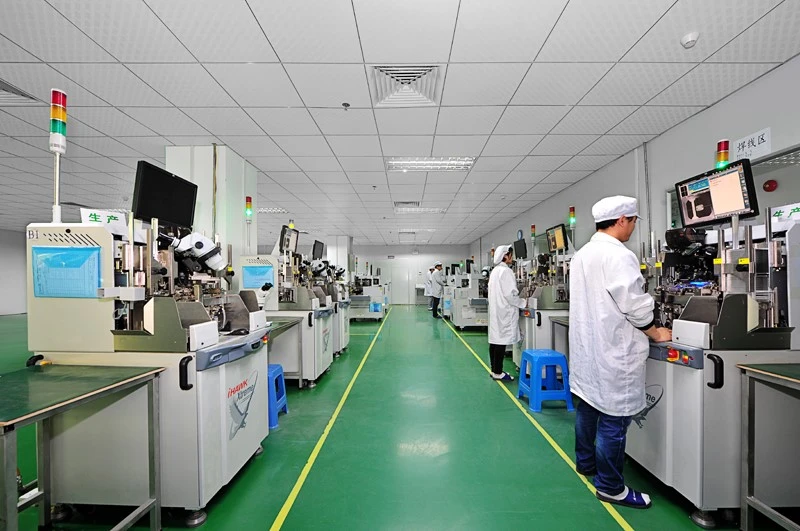
Founded in 2004, Lighting Ltd. specializes in the packaging of medium- and high-power LED devices for lighting; and moved its factory to Fujian Hutou Optoelectronic Industrial Park in 2017.
In Fujian, we have more than 25,000 square meters of factory buildings and more than 20,000 square meters of ultra-clean, anti-static modern dust-free workshop.
Passed IATF16949, ISO9001, ISO14001, ISO45001 (OHSAS18001) quality management system certification.
Semiconductor packaging business since 2015; own optocoupler brand in 2018; optical sensor product line in 2020; integrated class packaging product line in 2021.
Dozens of invention and utility model patents, many authorized patents.
Responding to the strategic goal of China Chip: cooperating with domestic mainstream brands to actively create integrated products made in China.
our products

Asked Questions
As one of the leading near infrared led suppliers in China, we warmly welcome you to buy discount near infrared led from our factory. All customized products are with high quality and competitive price. For quotation and free sample, contact us now.
3535 SMD IR LED 1050NM, 3535 SMD 1450 nm LED, 3535 SMD 1450 nm LED 2V