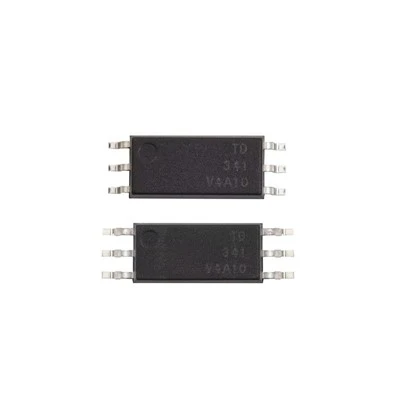
Due to the non-interference between the optical signal at the transmitting end and the electrical signal at the receiving end, optocouplers have good electrical insulation and anti-interference capabilities, as well as advantages such as small size, long lifespan, contactless, and unidirectional signal transmission, and have been widely used.
Simply put, an optocoupler is a product formed by integrating the LED on the input side and the photodetector on the output side. According to the type of photodetector on the output side of the optocoupler and the structure and characteristics of the circuit, optocouplers can be divided into the following categories:
1 transistor output type optocoupler
As the most common type of optocoupler product, its photoelectric receiver is a photosensitive transistor, with an output terminal of a single cell or Darlington transistor, divided into DC signal or AC signal control types. It has the characteristics of high current transfer ratio (CTR), high voltage resistance, low input current, and low price, strong universality, and is widely used. However, its drawbacks are slow transmission speed and large timing delay.
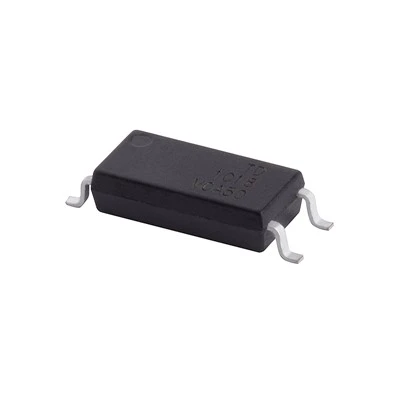
2 IC output type optocoupler
This type of optocoupler uses a photodiode as the light receiving element, and is equipped with an IC for signal amplification and shaping, which can achieve high-speed signal transmission with a data transmission rate of 1-50Mbps. IC output optocouplers can be further divided into several different types, including high-speed optocouplers used for transmitting logic signals, and driving optocouplers used as gate drivers for power components such as IGBTs.
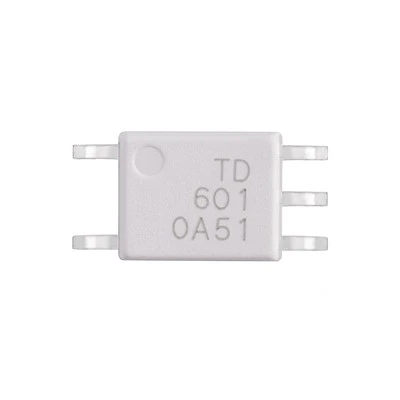
3 .thyristor output type optocoupler
The thyristor output type optocoupler is mainly used to control AC loads, including bidirectional thyristor output and unidirectional thyristor output. They use high voltage resistant thyristors, which can control 100mA AC loads with a low current of about 10mA while providing electrical isolation. Combined with power controllable silicon, this optocoupler can control up to a few amperes of alternating current.
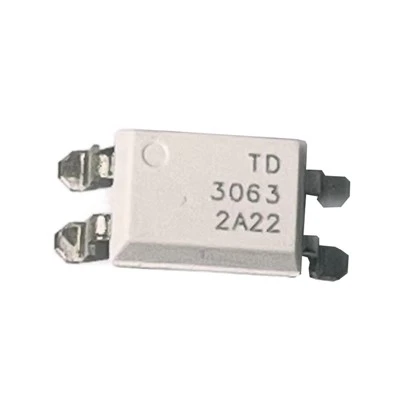
4. optical relays
This optocoupler has two MOSFETs connected to a common source in the output grading, which can achieve the same function as mechanical relays. Compared with mechanical relays, it has the characteristics of long lifespan, low current drive, and fast response.