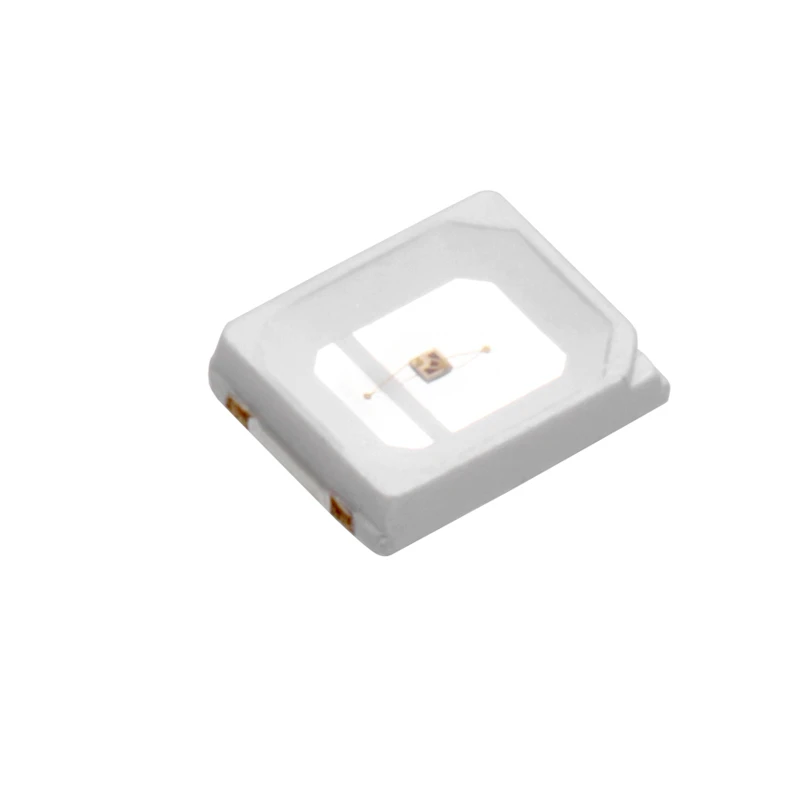
Low-power resistors are usually made of a carbon film encapsulated in a plastic housing, while high-power resistors are usually wirewound resistors made by wrapping a high-resistivity wire around a porcelain core.
If the resistance value of a resistor is close to zero ohms (e.g., a large cross-section wire between two points), then the resistor has no impediment effect on the current, and the circuit of the resistor connected in parallel is shorted and the current is infinite. If a resistor has an infinite or very large resistance, the circuit connected in series to the resistor can be considered an open circuit with zero current. A resistor commonly used in industry is somewhere between two extremes, it has a certain resistance and can pass a certain current, but the current is not as large as in the case of a short circuit. The current-limiting effect of a resistor is similar to that of a small-diameter tube connected between two large-diameter tubes that restrict the flow of water. Resistance, often abbreviated as R, is a basic property of conductors, which is related to the size, material, and temperature of the conductor. Ohm's law says that I = U/R, then R = U/I, the basic unit of resistance is ohms, which is represented by the Greek letter "Ω", and has this definition: when a volt voltage is added to a conductor, the resistance corresponding to the current of one amperere is generated. The main function of a resistor is to block the flow of current. In fact, "resistance" refers to a property, and the resistance usually referred to in electronic products refers to a resistor as a component. Ohms are often abbreviated as ohms. Other commonly used units to express resistance are kiloohms (kΩ), megaohms (MΩ), and milliohms (m Ω).