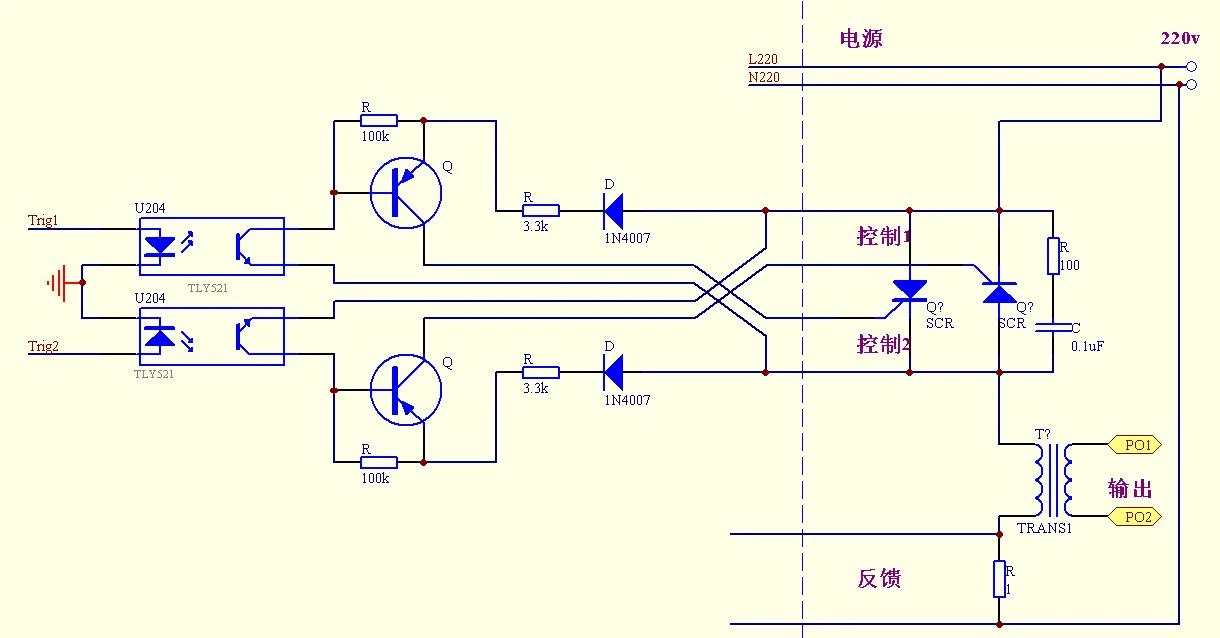
The reason for using optocouplers for electrical isolation is that optocouplers have some unique advantages, making them particularly effective in isolating high voltage and high current. The following are several main reasons:
High isolation performance: Optocouplers can provide very high isolation voltage, usually up to several thousand volts to several thousand volts. This means that they can effectively prevent electrical breakdown and arc discharge in high-voltage systems, improving the safety and reliability of the circuit.
Electrical insulation: There is good electrical insulation between the input and output terminals of the optocoupler, which can prevent common mode noise and electromagnetic interference (EMI) from entering sensitive circuits through isolation paths.
Long lifespan and high reliability: Due to the lack of mechanical components, optocouplers have a long lifespan and a low failure rate due to the lack of moving parts. This enables the optocoupler to maintain high stability and reliability in long-term use.
Non contact signal transmission: Optocouplers transmit signals through light without the need for physical contact, thus avoiding mechanical contact wear and poor contact problems.
Unidirectionality of signal transmission: The signal transmission of optocouplers is unidirectional, which means that the output signal will not feedback to the input end, simplifying circuit design and avoiding feedback problems.
Level conversion capability: Optocouplers can achieve different level conversions, which is very useful for low-voltage systems that need to drive high-voltage loads.