In terms of structure, high-speed optocouplers are different from ordinary optocouplers. The structure of high-speed optocouplers is a photodiode+amplification drive circuit, while the structure of ordinary optocouplers is a photosensitive transistor (+amplification drive circuit). The response speed (rise and fall time) of a photodiode is in the nanosecond range, while the response speed (rise and fall time) of a photosensitive transistor is in the microsecond range. It's not that a regular optocoupler can work at high speed in the linear region, but its inherent response time limits its speed. In addition, if the ordinary optocoupler operates in the linear region, it will also be limited by the cut-off frequency parameter Fc. The Fc of the ordinary optocoupler is basically around 50KHz (test conditions VCC=5v, IC=5ma, RL=100R, RL increases and Fc is smaller. When RL=1K, Fc is about 10KHz), such as TLP521, Fc is about 50KHz, PC817, Fc is about 80KHz, CNY117, Fc is about 250KHz.
Of course, some ordinary optocouplers can indeed achieve a speed of 500KHz by increasing the driving current (to 200MA), reducing the load resistance (to 500OHM), optimizing the driving pulse, and so on.
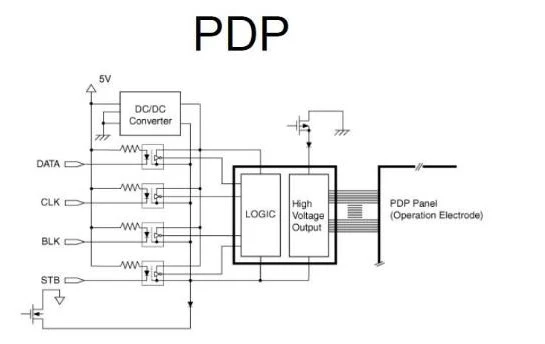
1.The application of high-speed optocouplers
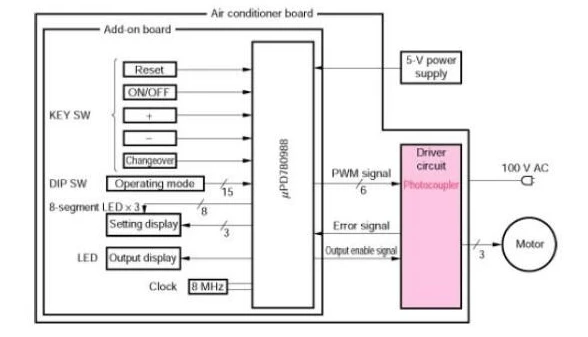
2. Application of high-speed optocoupler in driving power supply