


Structural differences
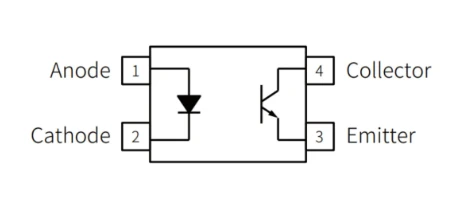
Transistor optocouplers typically consist of a light-emitting diode (LED) and a phototransistor (phototransistor), used to convert optical signals into electrical signals.
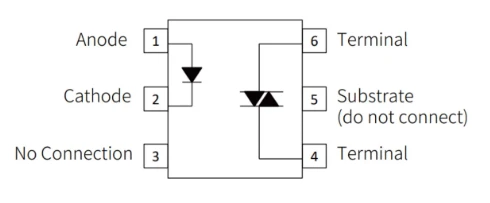
The thyristor optocoupler includes an LED and a thyristor device (such as a bidirectional thyristor or a three terminal thyristor), used to achieve power control and switch control functions
Functional differences
Transistor optocouplers are mainly used for signal isolation and transmission, which can convert input signals (current or voltage) into output signals and achieve electrical isolation function.
The thyristor optocoupler is suitable for power control and switch control, and can achieve control and regulation of high-power devices, with high power control capability.
Characteristic differences
Transistor optocouplers have low power control capabilities and are mainly used for transmitting and isolating low-power signals.
The thyristor optocoupler has high power control capability and is suitable for controlling and adjusting high-power devices.
application area
Transistor optocouplers are commonly used in digital circuits, analog circuits, automatic control systems, and other applications that require signal isolation and transmission.
Controllable silicon optocouplers are widely used in applications that require power control and high-frequency switching, such as dimmers, speed controllers, temperature controllers, electric furnace controls, and motor controls.
In general, by distinguishing between transistor optocouplers and thyristor optocouplers in terms of structure, function, application fields, and characteristics, it is possible to clearly distinguish between them and select optocouplers that are suitable for specific application requirements.