


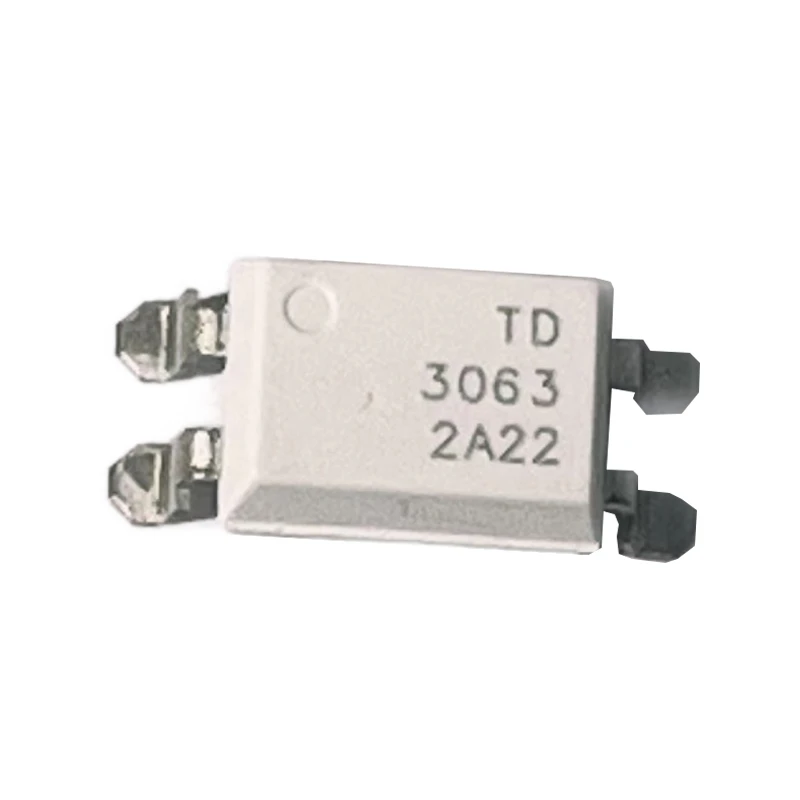
The so-called zero crossing detection refers to the system detecting the zero position when the waveform transitions from positive half cycle to negative half cycle or from negative half cycle to positive half cycle in the AC circuit. Zero crossing detection of thyristors refers to the process where the system detects a zero position and causes the thyristor contacts to conduct or disconnect when it is at or near the zero position. Zero crossing detection circuit can be designed to achieve the function, or optocouplers with zero crossing detection function can be used to achieve it.
We know that when the current is high, conducting or cutting off the circuit will cause significant impact on the load and power supply. The larger the current, the greater the impact, which will bring a lot of harmonic interference to the power grid. If the load is connected or disconnected when the current is zero, the impact can be minimized, thereby avoiding the impact caused by frequent disconnection of the load. So, zero crossing detection is very meaningful in high-power load control circuits.