


Product Parameter (Specification)
Features
High isolation 3750 VRMS
CTR flexibility available see order
Information
DC input with transistor output
Operating temperature range - 55 °C to 110 °C
REACH compliance
Halogen free
MSL class 1
Regulatory Approvals
UL - UL1577
VDE - EN60747-5-5(VDE0884-5)
CQC - GB4943.1, GB8898
CUL- CSA Component Acceptance
Service Notice No. 5A
|
ABSOLUTE MAXIMUM RATINGS |
||||
|
PARAMETER |
SYMBOL |
VALUE |
UNIT |
NOTE |
|
INPUT |
||||
|
Forward Current |
IF |
±60 |
mA |
|
|
Peak Forward Current |
IFP |
±1 |
A |
1 |
|
Reverse Voltage |
VR |
6 |
V |
|
|
Input Power Dissipation |
PI |
100 |
mW |
|
|
OUTPUT |
||||
|
Collector - Emitter Voltage |
VCEO |
80 |
V |
|
|
Emitter - Collector Voltage |
VECO |
6 |
V |
|
|
Collector Current |
IC |
50 |
mA |
|
|
Output Power Dissipation |
PO |
150 |
mW |
|
|
COMMON |
||||
|
Total Power Dissipation |
Ptot |
200 |
mW |
|
|
Isolation Voltage |
Viso |
3750 |
Vrms |
2 |
|
Operating Temperature |
Topr |
-55~110 |
°C |
|
|
Storage Temperature |
Tstg |
-55~125 |
°C |
|
|
Soldering Temperature |
Tsol |
260 |
°C |
|
|
ELECTRICAL OPTICAL CHARACTERISTICS at Ta=25°C |
||||||||
|
PARAMETER |
SYMBOL |
MIN |
TYP. |
MAX. |
UNIT |
TEST CONDITION |
NOTE |
|
|
INPUT |
||||||||
|
Forward Voltage |
VF |
- |
- |
1.4 |
V |
IF=10mA |
||
|
Input Capacitance |
Cin |
- |
10 |
- |
pF |
V=0, f=1kHz |
||
|
OUTPUT |
||||||||
|
Collector Dark Current |
ICEO |
- |
- |
100 |
nA |
VCE=20V, IF=0 |
||
|
Collector-Emitter Breakdown Voltage |
BVCEO |
80 |
- |
- |
V |
IC=0. 1mA, IF=0 |
||
|
Emitter-Collector Breakdown Voltage |
BVECO |
6 |
- |
- |
V |
IE=0. 1mA, IF=0 |
||
|
TRANSFER CHARACTERISTICS |
||||||||
|
Current Transfer Ratio |
TD214 |
CTR |
20 |
- |
400 |
% |
IF=1mA, VCE=5V |
|
|
TD214A |
50 |
- |
150 |
|||||
|
TD214B |
80 |
- |
400 |
|||||
|
CTR Symmetry |
0.7 |
- |
1.3 |
IF=±1mA, VCE=5V |
||||
|
Collector-Emitter Saturation Voltage |
VCE(sat) |
- |
0.07 |
0.2 |
V |
IF=20mA, IC=1mA |
||
|
Isolation Resistance |
RISO |
10^12 |
10^14 |
- |
Ω |
DC500V, 40 ~ 60% R.H. |
||
|
Floating Capacitance |
CIO |
- |
0.4 |
1 |
pF |
V=0, f=1MHz |
||
|
Response Time (Rise) |
tr |
- |
7 |
18 |
μs |
VCE=2V, IC=2mA RL=100Ω |
3 |
|
|
Response Time (Fall) |
tf |
- |
9 |
18 |
μs |
3 |
||
Product Feature And Application
Applications
Switch mode power supplies
Programmable controllers
Household appliances
Office equipment
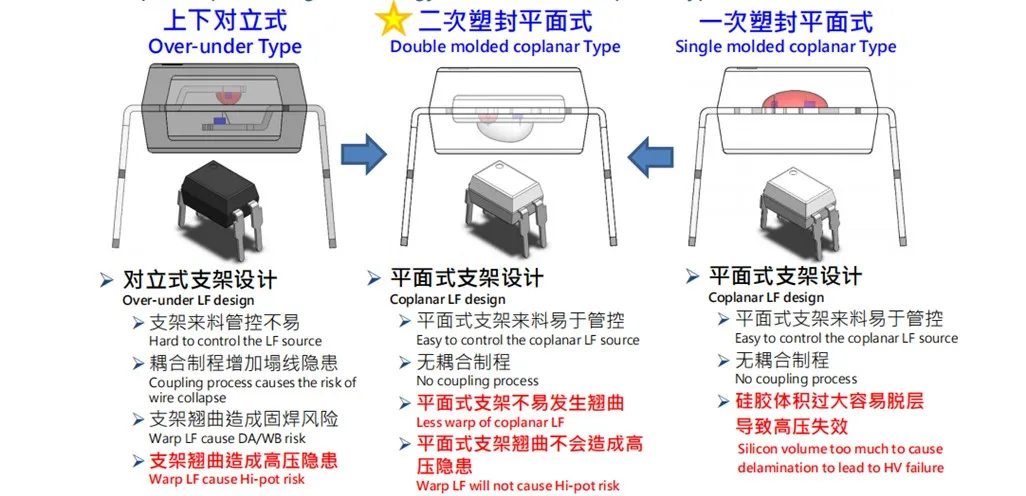
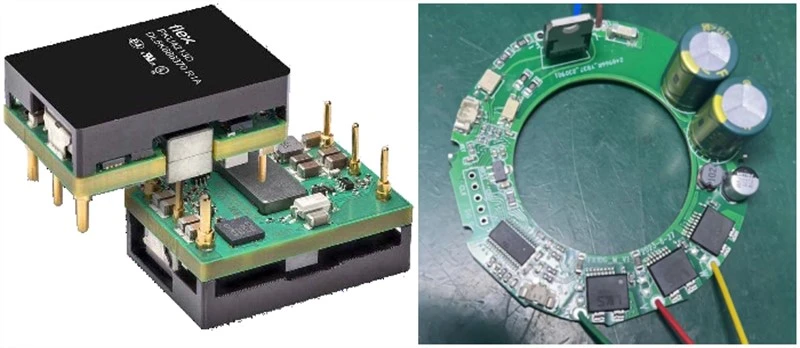
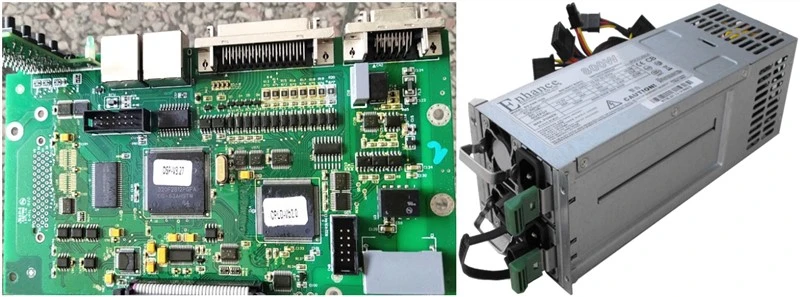
In terms of performance, it can replace Everlight EL3H4, Liteon LTV-214, Ctmicro CT214, Sharp PC3H41, Avago ACPL-214, Fairchild FODM214, Renesas PS2805X-1/2815X-1/PS2865X-1, Toshiba TLP280/284/292, The CTR is 600-7500%, widely used in switch mode power supplies, smart meters, industrial control, measuring instruments, office equipment (copiers), household appliances (air conditioning, fans, water heaters).
Prodection Details
SSOP4 DarliangtonTransistor Optocoupler
Package Dimensions (Dimensions in mm unless otherwise stated)
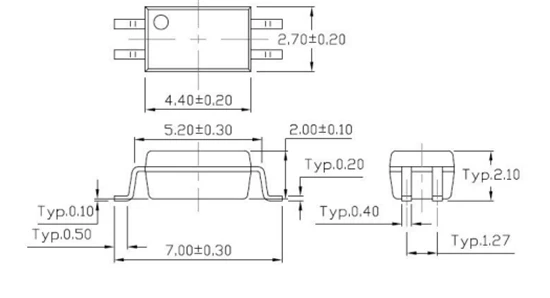
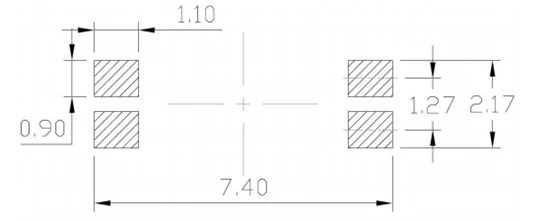
Recommended Solder Mask (Dimensions in mm unless otherwise stated)
Prodect Qualification


Deliver, Shipping And Serving

Latest News


FAQ
1.The TD214 optocoupler for what field?
1. Industrial Control: 214 optical rotation plays a vital role in the field of industrial control. It can effectively isolate the power supply, prevent electrical noise disturbance, to ensure the stable operation of the control system.
2. Communication equipment: in communication equipment, 214 optical conversion is used to protect sensitive components from electromagnetic interference and improve communication quality.
3. Automotive Electronics: automotive electronics systems require high levels of stability and safety. 214 light can effectively suppress electromagnetic interference.
2.Two-way optocoupler?
The bi-directional optocoupler input can have both positive and negative poles.
3.What is the difference between unidirectional and bidirectional coupling?
One-way coupling and two-way coupling are two common coupling modes. The main difference between them is the direction of signal transmission. One-way coupling is a common mode of coupling, which is usually used to connect two circuits so that signals can be transmitted from one circuit to another. In unidirectional coupling, only one direction can transmit the signal, so one circuit can only be used as the source circuit, while the other circuit can only be used as the load circuit. Two-way coupling is a more flexible coupling, which allows the signal to be transmitted in both directions. In two-way coupling, both circuits can be used as source and load circuits, so it is usually used in situations where two-way communication is required.
4.What kind of optocoupler is EL3H4? How is it different from TD214?
EL3H4 is a series of optocouplers produced by Everlight Electronics (an optocoupler is an electronic component that uses light to isolate and transmit electrical signals. The EL3H4 series optocouplers are typically used for alternating current (AC) or direct current (DC) inputs , they have high isolation voltage and good electrical isolation performance, and can protect circuits from noise interference and electric shock hazards. Key features of the EL3H4 series optocouplers include: High isolation voltage Reliable photoelectric isolation performance Low transmission delay time High current transfer ratio Good temperature stability and long life These characteristics make the EL3H4 series optocouplers suitable for various industrial control, power supply, communication equipment and household appliances and other fields. They usually come in 4-pin SSOP or SOIC packages, which are small and easy to layout on the circuit board.
TD214 and EL3H4 are just named differently, and they are completely interchangeable in terms of performance.
5.The role of bidirectional optocouplers in power supply design?
Isolation effect
The most important role of bidirectional optocouplers in power supply design is isolation. It improves the stability and reliability of the power system by electrically isolating the input and output to avoid signal interference and loss. This isolation can prevent high-voltage electrical damage to core components, while also preventing external interference signals from affecting internal circuits through optocouplers.
Anti-interference ability
Bidirectional optocouplers have strong anti-interference ability, which can effectively resist external electromagnetic interference and ensure the stability of signal transmission. This is crucial for power supply design, as power systems are often subject to various electromagnetic interferences that may come from the environment or other electronic devices. By using bidirectional optocouplers, the power supply design can significantly improve its anti-interference ability, thereby ensuring the normal operation of the power supply system.
signal transmission
Bidirectional optocouplers can also achieve high-speed and bidirectional signal transmission. In power supply design, this can be used to control and monitor the status of the power supply. For example, the output voltage and current signals of the power supply can be transmitted to the control unit through a bidirectional optocoupler for real-time monitoring and adjustment of power supply parameters. In addition, bidirectional optocouplers can also be used to transmit control signals to achieve remote control of the power supply
Hot Tags: s sop 4 ac optocoupler, China s sop 4 ac optocoupler suppliers, 2835 IR LED 740 nm, for PC852, 2835 SMD LED 810 nm, DIP 8 AC Optocoupler, L SOP 6 Gate Driver, SOP 4 Transistor Optocoupler


