


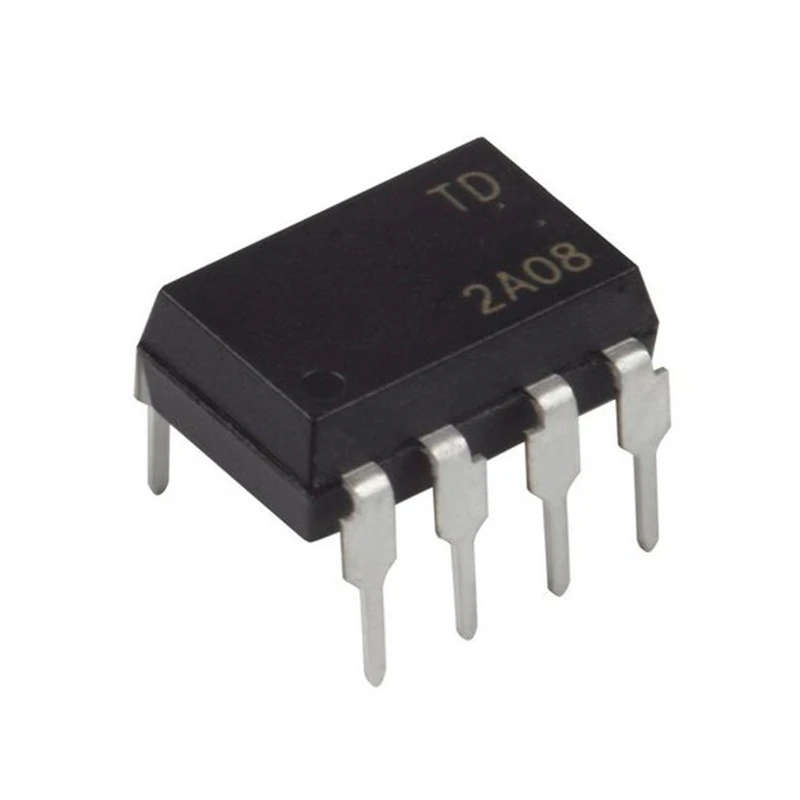

Product Parameter (Specification)
Features/Specs:
0.6A maximum peak output current
0.5A minimum peak output current
15-kV/μs minimum Common Mode Rejection (CMR) at VCM = 1500V
1.0V maximum low level output voltage (VOL) eliminates need for negative gate drive
ICC = 5 mA maximum supply current
Under voltage lock-out protection (UVLO) with hysteresis
Wide operating VCC range: 15V to 30V
0.5-μs maximum propagation delay
±0.35-μs maximum delay between devices/channels
Industrial temperature range: –40°C to 100°C
Storage Temperature (Ts): -55°C to 125°C
Operating Temperature (TA): -40°C to 100°C
Max Average Input Current (IF(AVG)): 25mA
Max Peak Transient Input Current (<1-μs pulse width, 300 pps) (IF(TRAN)): 1 A
Max Reverse Input Voltage (VR): 5V
Max "High" Peak Output Current (IOH(PEAK)): 0.6A
Max "Low" Peak Output Current (IOL(PEAK)): 0.6A
Supply Voltage (VCC – VEE): 0V to 35V
|
ABSOLUTE MAXIMUM RATINGS |
||||
|
PARAMETER |
SYMBOL |
VALUE |
UNIT |
NOTE |
|
INPUT |
||||
|
Forward Current |
IF |
25 |
mA |
|
|
Peak Forward Current |
IFP |
50 |
mA |
1 |
|
Peak Transient Current |
IF(trans) |
1 |
A |
2 |
|
Reverse Voltage |
VR |
5 |
V |
|
|
Input Power Dissipation |
PI |
100 |
mW |
|
|
OUTPUT |
||||
|
Collector - Emitter Voltage |
VCC |
35 |
V |
|
|
Output Voltage |
VO |
35 |
V |
|
|
Peak Output Current |
IO |
0.8 |
A |
|
|
Output Power Dissipation |
PO |
250 |
mW |
|
|
COMMON |
||||
|
Total Power Dissipation |
Ptot |
295 |
mW |
|
|
Isolation Voltage |
Viso |
5000 |
Vrms |
3 |
|
Operating Temperature |
Topr |
-40~100 |
°C |
|
|
Storage Temperature |
Tstg |
-55~150 |
°C |
|
|
Soldering Temperature |
Tsol |
260 |
°C |
4 |
|
ELECTRICAL OPTICAL CHARACTERISTICS at Ta=25° |
|||||||
|
PARAMETER |
SYMBOL |
MIN |
TYP |
MAX |
UNIT |
TEST CONDITION |
NOTE |
|
INPUT CHARACTERISTICS |
|||||||
|
Forward Voltage |
VF |
- |
1.38 |
1.8 |
V |
IF=10mA |
|
|
Reverse Current |
IR |
- |
- |
10 |
μA |
VR=5V |
|
|
Input Capacitance |
Cin |
- |
13 |
- |
pF |
V=0,f=1MHz |
|
|
OUTPUT CHARACTERISTICS |
|||||||
|
High Level Supply Current |
ICCH |
- |
1.9 |
3 |
mA |
IF= 7mA to 10mA, VO= Open |
|
|
Low Level Supply Current |
ICCL |
- |
2.1 |
3 |
mA |
VF = 0 to 0.8V, VO= Open |
|
|
TRANSFER CHATACTERISTICS |
|||||||
|
High Level Output Voltage |
VOH |
VCC-2.5 |
VCC-1.5 |
- |
V |
IF= 10mA, IO= -100mA |
|
|
Low Level Output Voltage |
VOL |
- |
VEE+0.25 |
VEE+0.4 |
V |
IF= 0mA, IO= 100mA |
|
|
High Level Output Current |
IOPH |
-0.3 |
- |
- |
A |
VO= VCC-3.0V |
|
|
-0.8 |
- |
- |
A |
VO= VCC-6.0V |
|||
|
Low Level Output Current |
IOPL |
0.3 |
- |
- |
A |
VO= VEE+1.5V |
|
|
0.8 |
- |
- |
A |
VO= VEE+2.5V |
|||
|
Input Threshold Current |
IFLH |
- |
2 |
5 |
mA |
IO= 0mA, VO> 5V |
|
|
Input Threshold Voltage |
VFHL |
0.8 |
- |
- |
V |
IO= 0mA, VO< 5V |
|
|
Under Voltage Lockout Threshold |
VUVLO+ |
6.9 |
7.8 |
8.7 |
V |
IO= 10mA, VO> 5V |
|
|
VUVLO- |
5.9 |
6.7 |
7.5 |
V |
IO= 10mA, VO< 5V |
||
|
Isolation Resistance |
Riso |
10^12 |
10^14 |
- |
Ω |
DC500V, 40 ~ 60% R.H. |
|
|
Floating Capacitance |
CIO |
- |
1.0 |
pF |
V=0, f=1MHz |
||
Product Feature And Application
Applications
· Isolated IGBT/Power MOSFET gate drive
· Industrial Inverter
· AC brushless and DC motor drives
· Induction Heating
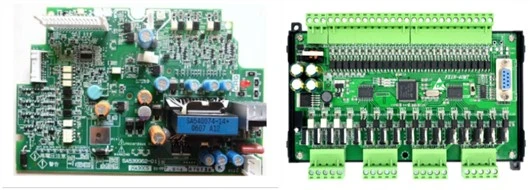
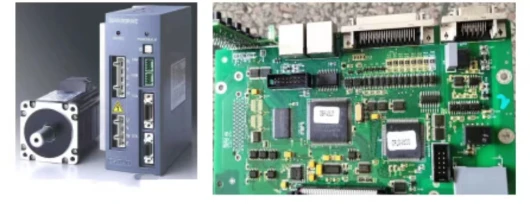
solated IGBT/MOSFET Gate Drive
AC and Brushless DC Motor Drives
Industrial Inverters
Switch Mode Power Supplies (SMPS)
Uninterruptable Power Supplies (UPS)
In terms of performance, it can replace Liteon LDV-3150, Ctmicro CT3150/250, Sharp PC923/924, Toshlba TLP351A-2451A, Avago HCPL3150 / J314 / T251/0302/3140/3020, Fairchild FOD3150, Renesa PS9506X/9553, Vishay VO3150, Orient OR-3150,Qunxin QX3150 package type SMD8 and DIP8, widely used in industrial inverters, uninterrupted power supply, induction heating, IGBT isolation/power MOSFET gate drive, AC brushless and DC motor drives, Induction Heating and other products.
Prodection Details
DIP 8 Gate Driver
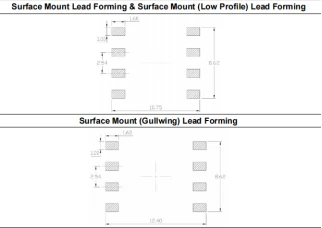
Package Dimensions (Dimensions in mm unless otherwise stated)
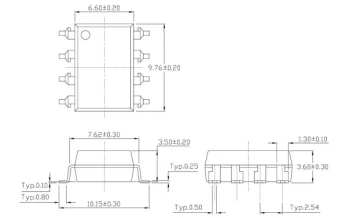
Recommended Solder Mask (Dimensions in mm unless otherwise stated)
Prodect Qualification


Deliver, Shipping And Serving

Latest News

FAQ
1.Is TD3150 a domestic brand? Is it the use of fully domestic materials?
Yes, TD3150 is a domestic brand, which is produced by Fujian Tiandian Optoelectronics Co., LTD., and can meet the standard of pure localization.
2.What is the difference between TD3150 optocoupler and TLV3150,CT3150 optocoupler?
The wafer used by each packaging plant is different, and there will be some differences in the stability and parameters of the optocoupler.
3.3150 Optocoupler applications in which products?
The 3150 optocoupler is suitable for power IGBTs and MOSFETs in drive motor control frequency conversion applications. For higher specification IGBTs, a higher specification product such as TD-3150 (0.5A) or TD-3120 (2.0A) can be used. Therefore, the application field of 3150 optocoupler is mainly in motor control frequency conversion applications, for driving power IGBTs and MOSFETs.
4.What type of general optocoupler is selected for inverter products?
There is no clear answer to the type of optocoupler used on the inverter products, and the application of optocoupler in the inverter is mainly as a medium for electrical signal transmission to achieve isolation between the input and output signals. Common optocoupler models include 817 series and IGBT optocoupler. When selecting an optocoupler, it should be selected according to the specific application scenarios and requirements, paying attention to the stability, reliability, and transmission speed of the optocoupler.
5.The difference between domestic 3150 optocoupler and imported 3150 optocoupler?
The main difference between domestic 3150 optocoupler and imported 3150 optocoupler lies in quality and price. Domestic 3150 optocoupler has a certain gap in quality with imported products, especially in terms of stability and reliability need to be further improved. The imported 3150 optocoupler usually has higher quality and performance, and the price is relatively high. Therefore, when choosing 3150 optocoupler, it is necessary to comprehensively consider the stability, reliability, performance and price of the product according to the actual needs, and choose the product that is suitable for you.
6.Why does the optocoupler have four or eight feet, and what does the foot position represent?
Optocoupler is a common electronic component used to isolate the input and output to protect the sensitive devices in the circuit. The number and arrangement of the pins of the optocoupler are different to adapt to different application scenarios and functional requirements. Common optocouplings have 4 feet and 8 feet, of which 4 feet of the optocoupler is more common.
The feet of the optocoupler represent different parameters and functions. For example, in the use of optocoupler, the output voltage may be wrong or high, low and other problems. At this time, it is necessary to debug and optimize the optocoupler to achieve the expected use effect. In addition, the different pins of the optical coupling also bear different functional responsibilities, such as output feedback, constant current, overload protection, etc. Therefore, the correct identification of the optocoupler foot is of great significance for the correct installation, debugging and maintenance of the optocoupler circuit.
In short, the pin of the optocoupler represents different parameters and functions, and the correct identification and configuration of the pin of the optocoupler is of great significance for the application of the optocoupler and circuit debugg.
7.Precautions for using DIP 8 gate drive
1. Isolation and safety issues
When designing circuits, it is important to consider whether the gate driver needs to be electrically isolated from high side power devices. Especially when using multi power device configurations such as bridge circuits, isolation becomes particularly important to avoid electric shock and equipment damage.
2. Power matching
The gate driver requires a stable power rail that matches the details of the driver and power equipment. When selecting a DC/DC converter, it is necessary to consider the output voltage, current capability, and transient response of the converter to ensure that the gate driver can effectively drive power device 1.
3. Requirements for gate driving voltage and current
The requirements for gate driving voltage and current depend on the structure of the transistor and the rated drain current. The common range of values is between 8 to 30 volts and 1 to 5 amperes. In high noise environments, it may also be necessary to consider using bipolar output driver 2.
4. Power supply design for driving circuit
The power supply design of the gate drive circuit is another aspect that needs attention. Power supply design can include methods such as transformer isolation, bootstrap circuits, or charge pumps. The correct power supply design can ensure that the gate driver can operate stably under various load conditions.
5. Loss problem under high-frequency switch
In high-frequency switching operations, the charging and discharging process of the gate capacitor can result in significant power consumption and efficiency degradation. Therefore, when designing gate drivers, it is necessary to consider the impact of switching frequency on losses and choose devices that can support higher switching frequencies as much as possible.
6. Classification and selection of gate drivers
According to the working environment and requirements, gate drivers can be divided into two types: non isolated and isolated. Non isolated gate drivers are typically suitable for lower voltage applications, while isolated gate drivers can provide higher voltage tolerance and flexibility
Hot Tags: dip 8 gate driver, China dip 8 gate driver suppliers, SOP 4 Optocoupler, SMD 3920 Matel Element, 940 3535 SMD IR LED 2W, 2835 810 NM SMD LED 2V, for PS9117A, Transistor Optocoupler


