


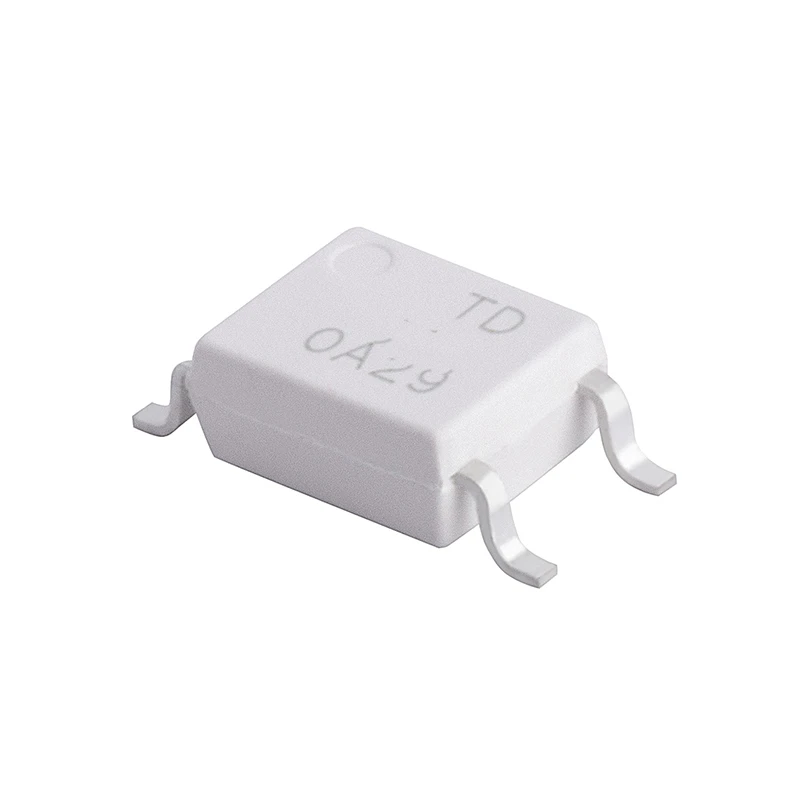

Product Parameter (Specification)
Features
High isolation 5000 VRMS
CTR flexibility available see order
Information
DC input with transistor output
Operating temperature range - 55 °C to
110 °C
REACH compliance
Halogen free
MSL class 1
Regulatory Approvals
UL - UL1577
VDE - EN60747-5-5(VDE0884-5)
CQC - GB4943.1, GB8898
CUL- CSA Component Acceptance
Service Notice No. 5A
|
ABSOLUTE MAXIMUM RATINGS |
|||||
|
PARAMETER |
SYMBOL |
VALUE |
UNIT |
NOTE |
|
|
INPUT |
|||||
|
Forward Current |
IF |
60 |
mA |
||
|
Reverse Voltage |
VR |
6 |
V |
||
|
Junction Temperature |
Tj |
125 |
°C |
||
|
Input Power Dissipation |
PI |
100 |
mW |
||
|
OUTPUT |
|||||
|
Off-state Output Terminal Voltage |
TD301X |
VDRM |
250 |
V |
|
|
TD302X |
400 |
||||
|
TD305X |
600 |
||||
|
TD307X |
800 |
||||
|
Peak Repetitive Surge Current PW=100μs, 120pps |
ITSM |
1 |
A |
||
|
On-State RMS Current |
IT(RMS) |
100 |
mA |
||
|
Junction Temperature |
Tj |
125 |
°C |
||
|
Output Power Dissipation |
PO |
300 |
mW |
||
|
COMMON |
|||||
|
Total Power Dissipation |
Ptot |
400 |
mW |
||
|
Isolation Voltage |
Viso |
5000 |
Vrms |
1 |
|
|
Operating Temperature |
Topr |
-40~100 |
°C |
||
|
Storage Temperature |
Tstg |
-55~125 |
°C |
||
|
Soldering Temperature |
Tsol |
260 |
°C |
2 |
|
|
ELECTRICAL OPTICAL CHARACTERISTICS at Ta=25°C |
||||||||
|
PARAMETER |
SYMBOL |
MIN. |
TYP. |
MAX. |
UNIT |
TEST CONDITION |
NOTE |
|
|
INPUT |
||||||||
|
Forward Voltage |
VF |
- |
1.24 |
1.4 |
V |
IF= 10mA |
||
|
Reverse Current |
IR |
- |
- |
10 |
μA |
VR=6V |
||
|
Input Capacitance |
Cin |
- |
8.5 |
250 |
pF |
V=0, f=1kHz |
||
|
OUTPUT |
||||||||
|
Peak Off-state Current, Either Direction |
IDRM |
- |
- |
100 |
nA |
VDRM=Rated VDRM IF=0 |
3 |
|
|
Peak On-state Current, Either Direction |
VTM |
- |
1.58 |
2.5 |
V |
ITM= 100mA |
||
|
Critical Rate of Rise of Off-state Voltage |
dV/dt |
1000 |
- |
- |
V/ μs |
VPEAK =Rated VDRM |
4 |
|
|
TRANSFER CHARACTERISTICS |
||||||||
|
LED Trigger Current |
TD3010,TD3021, TD3051,TD3071 |
IFT |
- |
- |
15 |
mA |
Terminal Voltage = 3V ITM= 100mA |
|
|
TD3011,TD3022, TD3052,TD3072 |
- |
- |
10 |
|||||
|
TD3012,TD3023, TD3053,TD3073 |
- |
- |
5 |
|||||
|
Holding Current |
IH |
- |
257 |
- |
μA |
|||
|
Isolation Resistance |
Riso |
10^12 |
10^14 |
- |
Ω |
DC500V, 40 ~ 60% R.H. |
||
|
Floating Capacitance |
CIO |
- |
0.4 |
1 |
pF |
V=0, f=1MHz |
||
Product Feature And Application
Applications
Switch mode power supplies
Programmable controllers
Household appliances
Office equipment
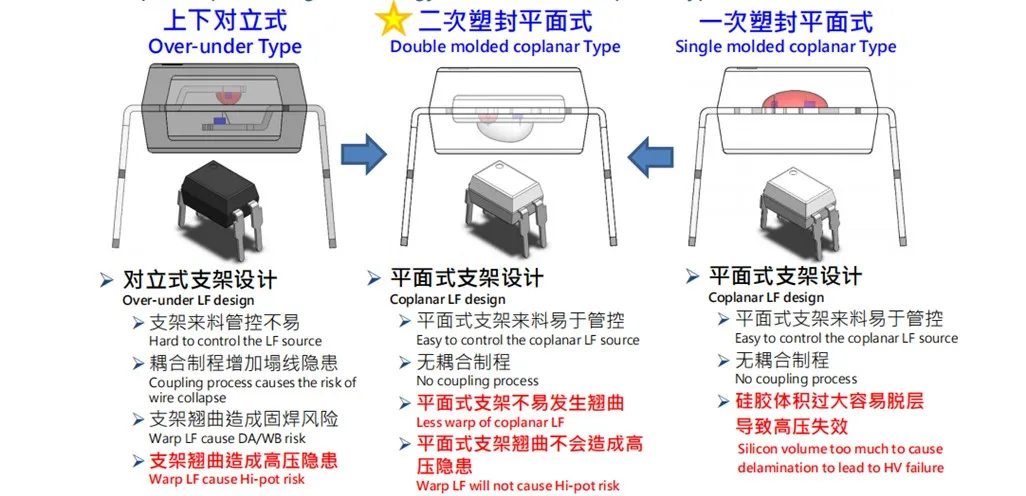
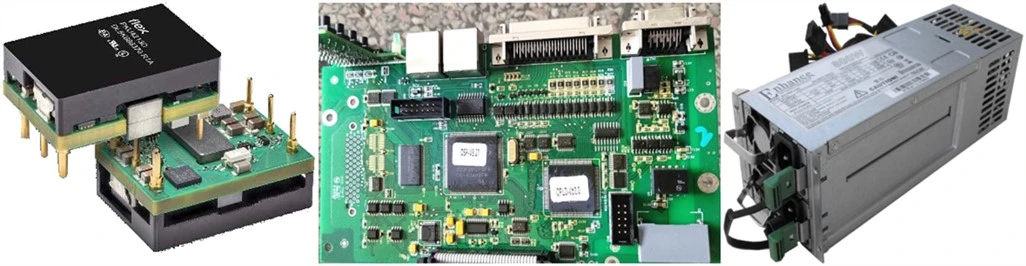
In terms of performance, it can replace Everlight EL302X, Liteon LTV302X, Ctmicro CT302X, Sharp S11MD5V,Avago ACPL-214, Cosmo KMOC302X, Fairchild MOC302X, Renesas, TLP560G/665G/160G/302X.
The widely used in switch mode power supplies, smart meters, industrial control, measuring instruments, office equipment (copiers), household appliances (air conditioning, fans, water heaters).
Prodection Details
SOP 4 Random-phase TRIAC
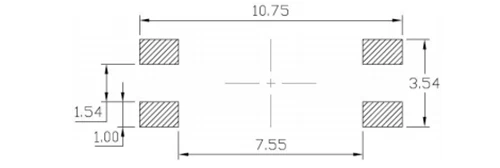
Package Dimensions (Dimensions in mm unless otherwise stated)
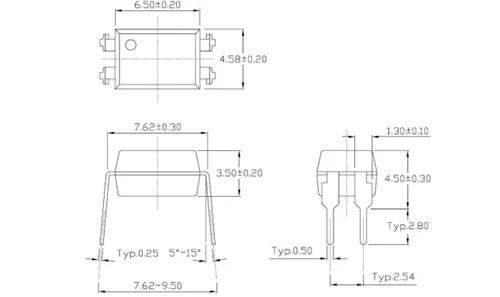
Surface Mount Lead Forming & Surface Mount (Low Profile) Lead Forming
Prodect Qualification


Deliver, Shipping And Serving

Latest News


FAQ
1.TD302XFeatures?
Peak breakdown voltage: 250V:TD301X;400V:TD302X;600V:TD305X
High isolation voltage between input and outputs
(Viso=5000 Vrms).
2.How to choose a thyristor optocoupler?
Thyristor optocoupler is a commonly used electronic component for signal transmission and isolation. When selecting, multiple factors need to be considered, such as linearity, isolation ability, working voltage, current, etc. According to the search results , the selection of thyristor optocouplers needs to consider the following aspects:
Linearity: The linearity of the thyristor optocoupler is an important factor affecting the accuracy of signal transmission. When selecting, it is necessary to ensure that the output characteristics and input characteristic curves of the optocoupler meet the requirements to ensure the linearity of signal transmission.
Isolation capability: The main function of the thyristor optocoupler is to isolate signal transmission and high-voltage circuits. When selecting, it is necessary to consider the isolation capability to ensure that the optocoupler can isolate the required signal and high-voltage circuit.
3.The working principle of silicon-controlled optocoupler?
Silicon-controlled optocoupler is a device that converts input optical signal into output electrical signal. Its basic components are photoelectric conversion devices and thyristor components. When the input optical signal irradiates on the photoelectric converter, the photoelectric converter converts the optical signal into electrical signal, and modulates and controls the output electrical signal through the silicon-controlled element.
4.Application fields of silicon controlled optocoupler?
1). Power control: silicon-controlled optocoupler can be used for AC and DC control, including AC dimming, DC Dimming, DC current control, AC contactor, reluctance thyristor and so on.
2). Electronic Circuit: SCR Optocoupler is widely used in various control circuits and switching circuits, such as time relay, switching power supply, inverter, DC power supply, inverter, etc.
3). Automatic Control: silicon-controlled optocoupler as a commonly used photoelectric isolation device, can be used in the field of automatic control signal isolation, security isolation, etc. , including PLC, frequency converter, discrete controller, automatic control device.
Hot Tags: sop 4 random-phase triac, China sop 4 random-phase triac suppliers, for ELM601, Thin Film Zero Ohm Jumper Resistors, SOP 4 Optocoupler, SMD 1206 Jumper, SMD 2512 Matel Element, SMD 0805 Jumper


